Digital isolators, serving as crucial components in modern electronic systems, undertake multiple tasks such as signal isolation, circuit protection, and system stability enhancement. Among them, the ADM2582EBRWZ digital isolator from Analog Devices has occupied an important position in the market due to its outstanding performance and wide range of applications. This article will delve into the current market demand for the ADM2582EBRWZ digital isolator, analyzing the driving factors behind it and future trends.
I. Current Market Demand
In recent years, with the rapid development of emerging technologies such as industrial automation, intelligent manufacturing, and the Internet of Things (IoT), the market demand for digital isolators has shown a trend of rapid growth. The ADM2582EBRWZ, as a high-performance digital isolator, enjoys particularly vigorous market demand. This is mainly attributed to its excellent electrical isolation performance, high-speed data transmission capabilities, and comprehensive protection functions, making it widely used in various industrial control, communication equipment, and power systems.
In the field of industrial control, digital isolators isolate circuits of different voltage levels to prevent system crashes caused by electrical interference or faults. The ADM2582EBRWZ, with its high isolation voltage (up to 2500Vrms) and high-speed data transmission rate (up to 16Mbps), plays a crucial role in industrial automation systems, significantly enhancing system reliability and stability.
In the field of communication equipment, digital isolators isolate digital and analog signals, preventing signal interference and noise interference, thus improving communication quality. The ADM2582EBRWZ integrates safety functions such as overvoltage protection and short-circuit protection, making it safer and more reliable for use in communication equipment.
Moreover, in power systems, digital isolators are widely used in data acquisition, control signal isolation, and fault protection. The ADM2582EBRWZ's high common-mode transient immunity and thermal shutdown protection features enable it to operate stably in complex power environments, providing robust support for the safe operation of power systems.
II. Driving Factors of Market Demand
Technological Advancements: Continuous technological development has provided technical support for the performance enhancement and cost reduction of digital isolators. The emergence of high-performance digital isolators such as the ADM2582EBRWZ is an important manifestation of technological advancements driving market demand growth.
Industrial Automation and Intelligent Manufacturing: The rapid development of industrial automation and intelligent manufacturing has placed higher requirements on the performance, accuracy, and reliability of digital isolators. High-performance digital isolators such as the ADM2582EBRWZ can meet these requirements, becoming important supports in the fields of industrial automation and intelligent manufacturing.
Proliferation of IoT Technology: The widespread adoption of IoT technology has expanded the application scenarios of digital isolators in smart homes, intelligent transportation, smart healthcare, and other fields. High-performance digital isolators such as the ADM2582EBRWZ can ensure the stability and security of signal transmission in IoT systems, driving the rapid development of IoT technology.
Policy Support: Governments have provided policy support for technological innovation and industrial upgrading, encouraging enterprises to increase R&D investments and enhance product technology levels. This has created a favorable policy environment for the development of the digital isolator industry, promoting market demand growth.
III. Future Trends
Looking ahead, with the continued promotion and application of emerging technologies such as Industry 4.0 and the IoT, the market demand for digital isolators will continue to grow rapidly. Meanwhile, as market competition intensifies and technology continues to advance, the performance of digital isolators will continue to improve, costs will decrease, and application fields will expand.
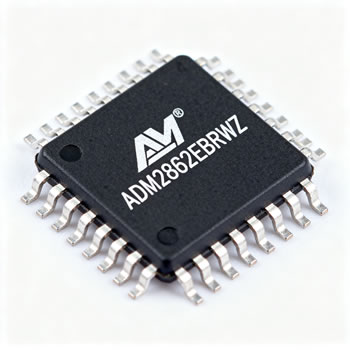
For high-performance digital isolators such as the ADM2582EBRWZ, future market trends will include:
Technological Innovation: With continuous technological advancements, the performance of digital isolators will continue to improve, such as higher isolation voltages, faster data transmission rates, and stronger protection functions. This will further expand the application fields of digital isolators, meeting the needs of more complex scenarios.
Cost Reduction: As market competition intensifies and the effects of large-scale production become apparent, the cost of digital isolators will continue to decrease. This will enable digital isolators to be widely used in more fields, driving the rapid development of the entire industry.
Integrated Applications: With the continuous development of IoT, big data, artificial intelligence, and other technologies, digital isolators will deeply integrate with other technologies to form smarter, more efficient, and safer electronic systems. This will bring new development opportunities and challenges for digital isolators.
In summary, the ADM2582EBRWZ digital isolator demonstrates strong growth momentum in market demand. With continuous technological advancements and market expansion, its application prospects will become broader. At the same time, facing intense market competition and technological challenges, enterprises need to continuously enhance their strength, strengthen technological innovation and quality management, and adapt to market changes to seize development opportunities.


