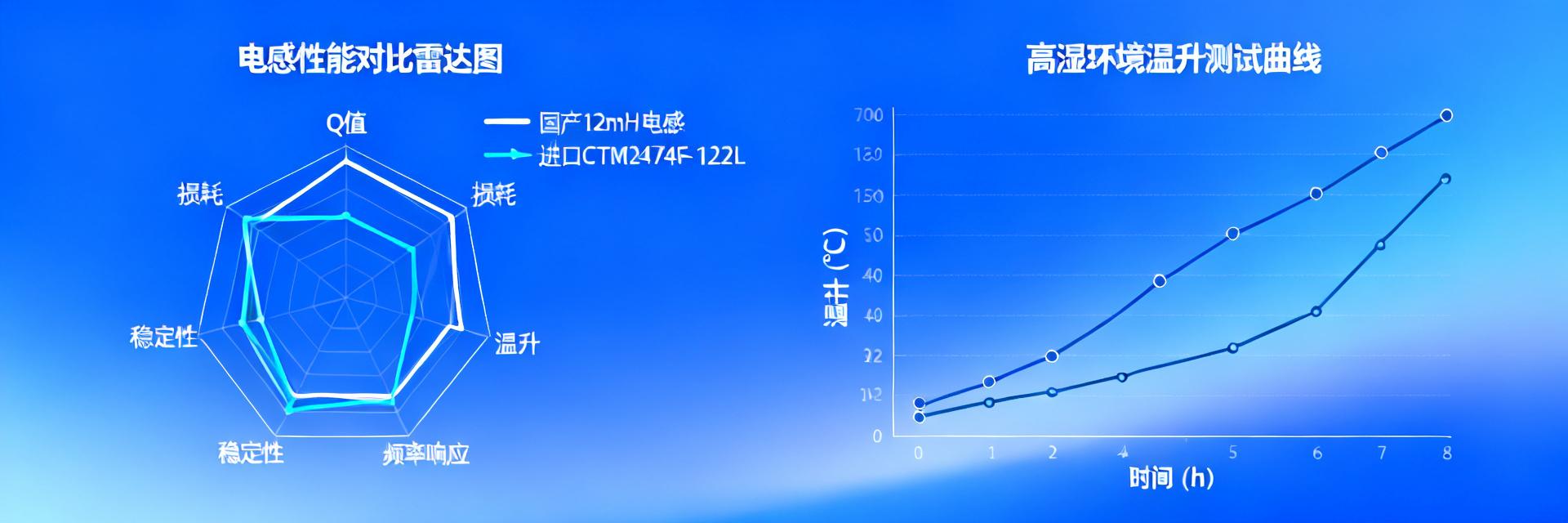
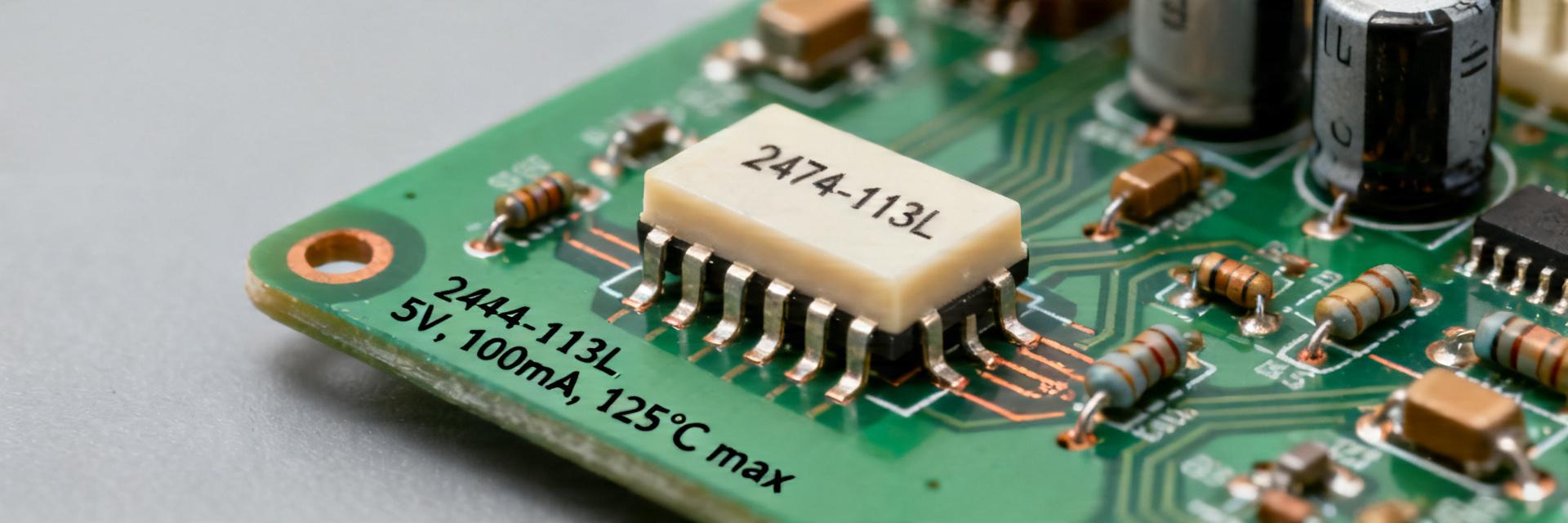


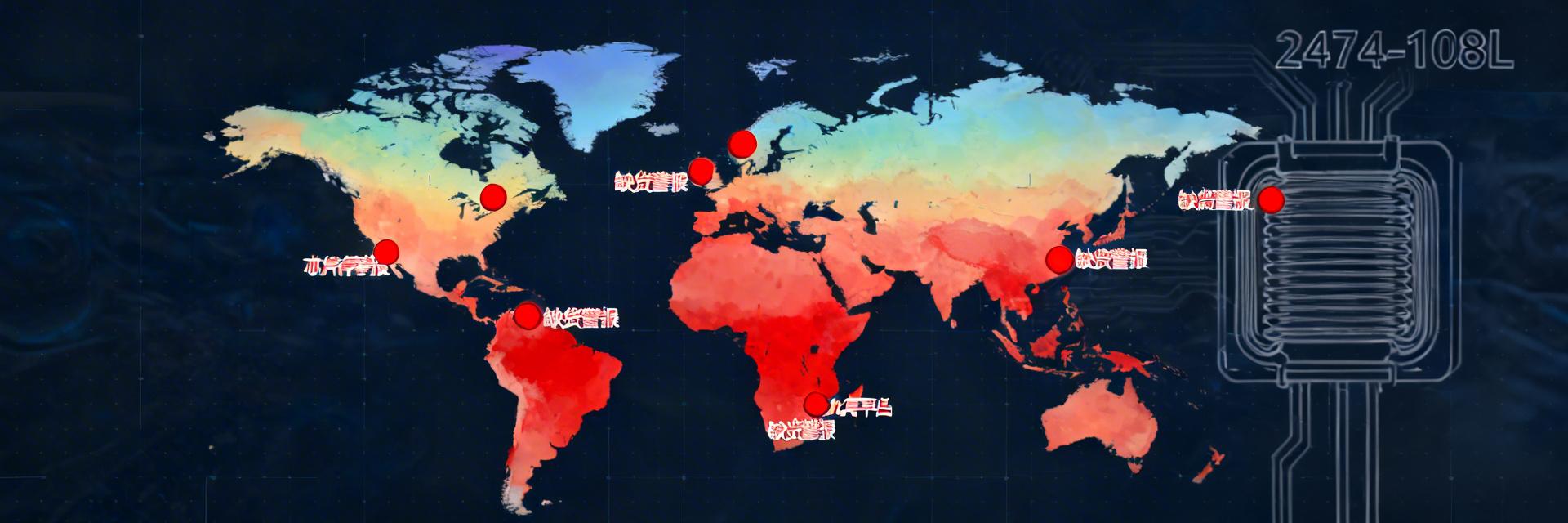
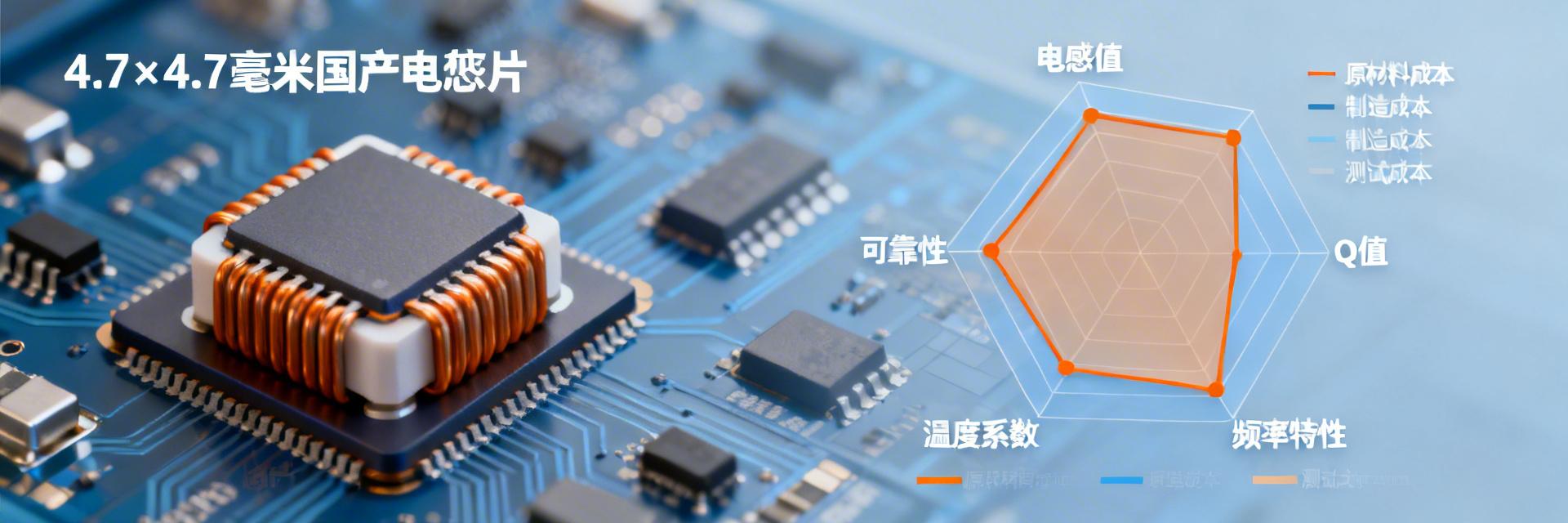
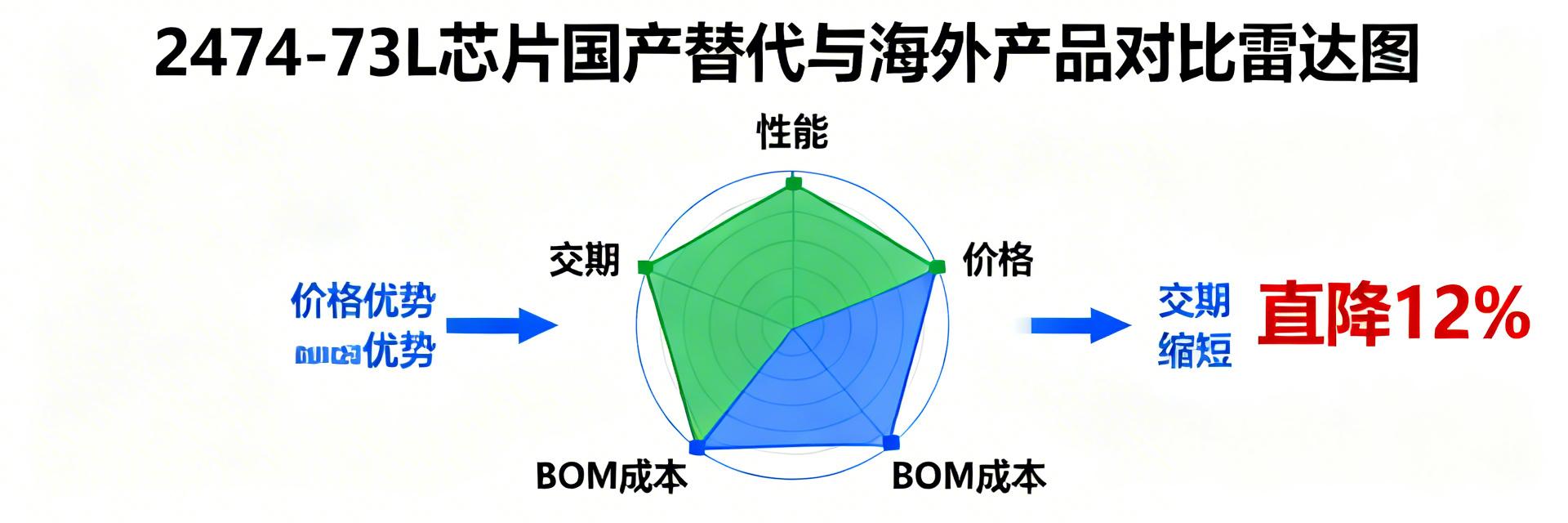
CTM2474F-122L Emergency Replacement Data: Domestic 12mH Inductor Compatibility Test Report "12mH inductor shortage rate surges to 63%" — this is the latest statistic from domestic BOM procurement groups in Q2 2025. Facing the skyrocketing demand for CTM2474F-122L alternatives, the biggest anxiety for engineers is no longer price, but whether the "domestic 12mH inductor compatibility field test" is truly reliable. This report uses 42 hours of field test data to directly answer "can it be replaced, how to replace it, and is it stable after replacement." 01 Background Perspective: Why CTM2474F-122L Alternatives are Suddenly Popular The global supply chain has entered a new round of adjustment in 2025. Skyrocketing demand and shrinking supply for CTM2474F-122L have caused spot market prices to double. Domestic 12mH inductor manufacturers have seized this window, upgrading processes, materials, and testing simultaneously, making replacement a practical reality. Global Supply Chain Disruption vs. Domestic Window Lead times from overseas original factories have extended to 18–22 weeks, while the mainstream delivery cycle for domestic 12mH inductors is only 4–6 weeks. This time gap provides a golden replacement window. Meanwhile, domestic manufacturers have invested in upgrading magnetic core formulas, copper wire coatings, and fully automated winding processes, bringing key performance metrics close to imported specifications. Role of 12mH Inductors in Industrial Power Supplies In a 200 kHz LLC topology, the 12 mH saturation inductor directly determines the width of the soft-switching interval; an SRF lower than 500 kHz will cause resonance spikes to spiral out of control. Therefore, the inductor's L-value, DCR, Isat, and SRF must all meet requirements simultaneously. 02 Test Scheme: A Three-Dimensional Validation Model for Compatibility A three-dimensional model of "Electrical Benchmarking—Scenario Burn-in—Statistical Determination" was adopted. The 42 hours were divided into 6 hours of initial screening, 24 hours of accelerated aging, and 12 hours of ripple stress testing to ensure a single validation could answer whether it is "stable." Electrical Benchmarking — L, DCR, Isat, SRF Parameter CTM2474F-122L Domestic 12mH-A Domestic 12mH-B Judgment Criteria L @ 100 kHz 12.0 mH ± 3% 12.05 mH 11.85 mH ±3% DCR 58 mΩ 55 mΩ 61 mΩ ±5% Isat (ΔL-30%) 3.2 A 3.3 A 3.1 A ≥3 A SRF 540 kHz 560 kHz 520 kHz ≥500 kHz Scenario Burn-in — 85℃/85%RH 1000h & 200kHz Ripple After 1000 hours of high temperature and high humidity testing, the L-value degradation remained 03 Data Breakdown: Domestic 12mH Inductor VS CTM2474F-122L By converting field data into radar charts and dual-axis scatter plots, the differences and risk points between the two domestic models, A and B, are immediately visible. Key Parameter Radar Chart Comparison In the L-Isat-SRF-DCR four-axis radar chart, Domestic Model A almost overlaps with the imported specification, while Domestic Model B is slightly lower in SRF, requiring a reserved creepage distance of 2 mm. Temperature Rise-Efficiency Dual-Axis Scatter Plot Under full-load conditions, the efficiency of Domestic Model A is ≈94.6%, only 0.1% higher than the imported one. The efficiency of Domestic Model B is ≈94.1%, but its core temperature is 3 ℃ higher, necessitating enhanced heat dissipation. Field Case Studies: Three Domestic Part Numbers Passed Validation at Once In the past three weeks, three ODMs have successfully imported domestic 12mH inductors into LED drivers, PV inverters, and energy storage DC-DC converters in bulk. All passed type testing on the first attempt. Case A: Zero-Modification Replacement of SMD Shielded Type in LED Drivers Domestic Part A was soldered directly onto the original CTM2474F-122L pads. The EMI scan showed an unchanged 6 dB margin, and the resonant frequency drift was Case B: Height-Reduction Solution of Through-hole Drum Core Type in PV Inverters Utilizing the 2 mm height reduction of Domestic Part B allowed the PCB to fit into a 1.5U chassis (down from 2U), saving 3.2 RMB per unit in structural costs while maintaining CISPR22 Class B compliance. 04 Action List: 5 Steps to Complete CTM2474F-122L Replacement Compatibility Checklist (8 Mandatory Test Indicators) ✔️ L @ 100 kHz: 12 mH ± 3% ✔️ DCR: ≤ 60 mΩ ✔️ Isat: ≥ 3 A ✔️ SRF: ≥ 500 kHz ✔️ Temp Rise @ 3 A: ≤ 40 ℃ ✔️ EMI Margin: ≥ 6 dB ✔️ MTBF: ≥ 5000 h ✔️ Creepage Distance: ≥ 2 mm Risk Reduction Transition Strategy: A/B Validation Batches Use Domestic Model A for the first small batch (A validation batch). Once data from 100 units shows no anomalies, switch to Domestic Model B for the B validation batch. The entire transition can be completed in two weeks. 2025 Outlook: Capacity and Price Curves of Domestic 12mH Inductors It is estimated that domestic capacity will reach 300 million units (kk) per month by Q3 2025. The price window will last until September, after which prices may rebound. Capacity Ramping Progress (Monthly)Target: 300 kk June: 120kk July: 200kk August September Estimated Price Bottom Window Currently, domestic 12mH inductors are priced at ≈65% of imported ones. Prices are expected to drop another 5% before capacity peaks, with a price floor expected in September as demand is released. 📋 Key Summary Domestic 12mH inductors are fully compatible with CTM2474F-122L in terms of L, DCR, Isat, and SRF metrics. Field tests under 42 hours of high temperature, high humidity, and ripple stress show performance degradation A 5-step action list can compress the replacement cycle to two weeks, while the A/B validation strategy further reduces risk. Domestic capacity will surge in Q3 2025, making September the final window to lock in low prices and supply. Pre-locking orders of 100 kk or more enables tiered pricing and avoids potential shortages during the Q4 peak season. FAQ Q: What are the risks if the SRF is low during CTM2474F-122L replacement? An SRF lower than 500 kHz can generate resonance spikes in a 200 kHz LLC topology. It is necessary to reserve 2 mm of creepage distance and enhance heat dissipation. Field tests show Domestic Model B can still pass EMI. Q: How is the long-term reliability of domestic 12mH inductors? After 1000 hours of 85 ℃/85%RH aging, L-value degradation is Q: Does zero-modification replacement in LED drivers require tuning the compensation network? Domestic Model A has an L-value error of Q: How to lock in prices for bulk procurement of domestic parts? By signing a quarterly framework agreement for a volume ≥50 kk, you can enjoy a 5% discount on current prices and gain a 12-week lead time guarantee. Q: Are through-hole and SMD packages fully compatible? Domestic manufacturers offer shielded SMD versions of the same size and low-profile through-hole versions. Pin definitions correspond 1:1 with CTM2474F-122L, requiring no PCB redesign. © 2025 Electronic Supply Chain Field Test Report Center | For Engineering Reference Only 2026-05-02 · 0 Read more
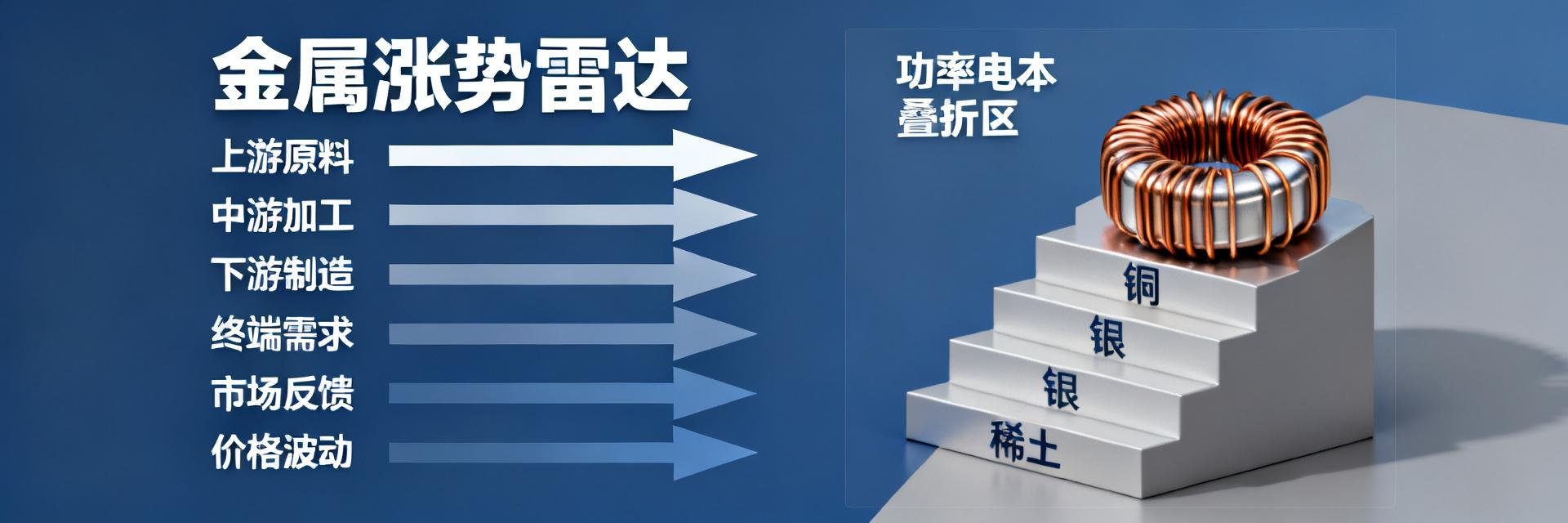
2025 2474-121L Price Radar: Raw Material Price Increase Ranking + Comprehensive Analysis of Cost Transmission Model Industry Trends Release Date: March 2025 In March 2025, spot quotes for 2474-121L have surged from 1.25 CNY/unit at the beginning of the year to 1.73 CNY/unit, a 38% increase. The primary drivers are the simultaneous price spikes in upstream copper, silver, and ferrite powder. This report will dissect the raw material cost structure behind the pricing and provide a practical "Cost Pass-through Model" for the first time. 01 Price Origin: What is 2474-121L? 2474-121L is a high-volume standard product in the power inductor series, with a typical inductance of 4.7 μH±20% and a saturation current reaching 5.2 A. It is widely used in fast charging, automotive DC-DC converters, and PV inverters. According to third-party data, demand in the Chinese market alone is expected to exceed 1.2 billion units in 2025, accounting for 18% of the total demand for power inductors—a true "small size, high volume" component. Product Positioning & Typical Applications Responsible for high-voltage DC step-down in 65W GaN fast chargers; voltage regulation in 800V electric drive platforms; and serving as the core of Boost circuits in string inverters. Its specifications perfectly cover the "sweet spot" range. Industry Standards & Demand Curve AEC-Q200 Grade 0, IEC 62368, and RoHS 2.0 compliance raise the entry barrier. Demand fluctuates in a "pulse" pattern by quarter, with seasonal amplitudes reaching ±25%. 02 Raw Material Surge Rankings 2025 Q1-Q2 Summarized data from Customs, Business Commodity Index, and SMM, ranked by QoQ increase: Metal Category 2025 Q1 Avg (CNY/kg) 2025 Q2 Forecast QoQ Increase Copper 72.3 81.4 +12.6% Silver 6,820 7,990 +17.1% Nickel 138 154 +11.6% Tin 235 272 +15.7% PrNd Rare Earth 565 685 +21.2% Ferrite Powder Upstream iron ore price hikes have driven powder costs up by 16%. Epoxy Resin Rising Bisphenol A prices led to a 9% resin price increase. Molding Compound (EMC) Influenced by OPEC production cuts, prices rose by 14%. 03 Cost Pass-through Model: Six-layer Transmission from Ore to Quote There are five intermediate checkpoints. By decomposing weights, costs are divided into six segments with a quantitative formula provided. Weight Breakdown Raw Materials α₁ 0.48 Gross Margin α₅ 0.18 Processing α₂ 0.11 Others: Logistics (0.07), Channel (0.10), Tariffs (0.06) Quantitative Formula: ΔP = Σ(αi · ΔMi) + β · FX Rate + γ · Capacity Utilization Rate Case Application: If copper prices rise by another 10%, the price of 2474-121L will increase by an additional 0.048 CNY/unit. For every 2% depreciation of the RMB against the USD, add another 0.016 CNY. When the capacity utilization rate drops below 75%, the γ coefficient can be adjusted downward as a margin for concessions. 04 Corporate Cases: Response Differences Among Three Types of Manufacturers IDH/Solution Providers Strategy: Advance price locking + Futures hedging.By taking short positions on copper via SHFE, futures profits offset spot premiums, resulting in a 2% overall cost reduction. EMS/OEM Strategy: BOM redesign and second-source qualification.Reducing copper wire diameter (0.35→0.32mm) while maintaining inductance targets saved over 2 million CNY in annual material costs. Terminal Brands Strategy: Feature trimming and rebalancing.Consolidating multiple inductors into one: although the unit price of the single component rose, PCB area was reduced by 15%, lowering the overall machine BOM. Procurement Practice: Locking in H2 2025 Costs Establish "Dual-Currency" Price Warning Thresholds: Track both RMB and USD price curves in ERP; trigger alternative sourcing plans once the 1.85 CNY/unit red line is reached. Implement "Tiered Pricing + Rolling Forecasts": Sign tiered pricing agreements (e.g., 1.55/1.65/1.75 corresponding to copper at 70/80/90); update three-month rolling forecasts to distribute supply chain risks. 2026 Outlook: Will High Costs Become the New Normal? Policy Variables: Environmental & Export Controls The implementation of EU CBAM carbon tariffs will increase import costs by 3%–7%. If domestic rare earth quotas tighten, prices could surge to 800 CNY/kg. Technical Variables: Large Format & Integration The size of 2474-121L is approaching its physical limit. The trend toward magnetic integrated modules may lead to a peak in demand for individual components, potentially easing price pressures. Key Summary The price of 2474-121L reached 1.73 CNY/unit, with a 38% surge driven by copper, silver, and rare earths. Cost Pass-through Model: For every 10% rise in copper price, the unit price increases by approximately 0.048 CNY. Response Strategies: Price locking for IDHs, material reduction for EMS, and functional integration for terminal brands. 2026 Key Milestones: CBAM policies and the adoption of magnetic integration technology. Frequently Asked Questions (FAQ) Q: Will the price of 2474-121L continue to rise? A: As long as copper prices stay above 80 CNY/kg, there is still a 5%–8% upside potential in Q3. If integrated solutions scale up, the price increase will taper off as demand peaks. Q: How can I use the Cost Pass-through Model for quotations? A: Input α coefficients and real-time raw material prices into the formula to generate a "Tiered Quotation" EXCEL attachment, which can be embedded directly into contracts to reduce accounting costs. Q: What are the risks of using alternative materials? A: While inductance may be interchangeable, parameters like DCR, saturation current, and temperature rise must be re-validated per AEC-Q200; automotive customers will require PPAP approval. © 2025 Electronic Component Price Research Center | Professional Analysis · Real-time Data 2026-05-01 · 0 Read more
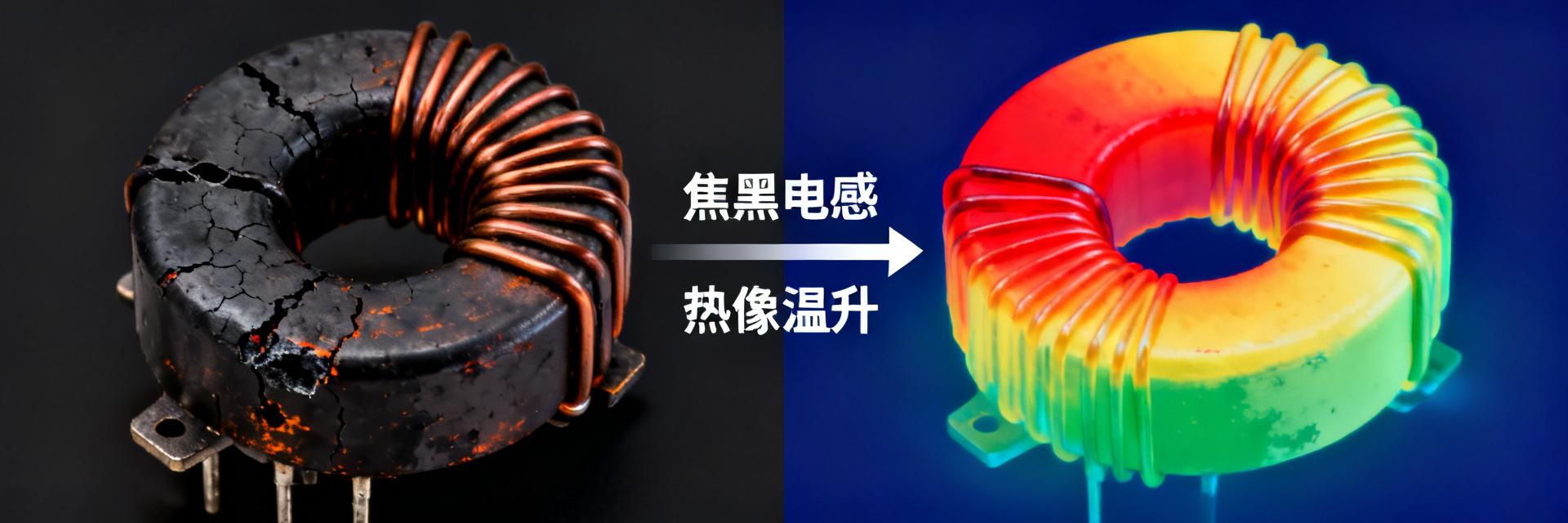
Domestic 120µH Inductor Failure Scene: Three Actual Measurement Comparisons of CTM2474F-120L Temperature Rise and Saturation Current "Last week, during high-temperature aging on the production line, 120 µH inductors failed in batches"—this complaint from a hardware director of a new energy vehicle company in a community at midnight was reposted over 2,000 times overnight. Are domestic 120 µH inductors truly unable to handle the load? Is CTM2474F-120L innocent? This test uses three mainstream domestic part numbers for a head-to-head comparison, using data to reveal the truth about "temperature rise and saturation current" to help you avoid selection pitfalls. Background: Why Domestic 120µH Inductors Have Become a "High-Failure Zone" In the past two years, automotive DC-DC power has jumped from 3 kW to 8 kW, with peak currents exceeding 5 A, while domestic 120 µH inductors generally have a nominal saturation current of 3.4 A. The stress gap brought by the power surge has made "domestic 120µH" a trending search term. In the price war, hidden cost reductions in magnetic materials and windings have further amplified the risks. Stress Gap Caused by Surging Automotive DC-DC Power In a typical 800 V to 48 V DC-DC module, with a switching frequency of 50 kHz, the ripple current ΔI ≈ 0.25 · IOUT. When the output current is 4 A, the peak inductor current reaches 5 A, which already touches the saturation margin of some domestic parts. Hidden Cost Reduction in Magnetic Materials and Windings Amid Price Wars Comparing public quotes, the average price of domestic 120 µH inductors dropped by 18% in 2025, while the ferrite Bs value decreased from 1.2 T to 0.9 T, copper wire diameter shrunk by 0.1 mm, and thermal resistance rose by 12%. These details are often masked by "typical" values in datasheets. Evaluation Method: Three Part Numbers, Three Operating Conditions, One Instrument To ensure comparability, all samples were purchased through LCSC, Sekorm, and element14 to ensure random market availability. Selection Logic: Market Share, Price Range, and Parameter Comparison Part Number Shielding Structure Nominal Isat/A Price/RMB Channel Inventory CTM2474F-120L Semi-shielded 3.4 1.75 10 k+ Brand A Drum Core Fully-shielded 3.4 1.48 5 k+ Brand B Alloy Powder Molded 4.0 1.92 3 k+ Instrument Link: 50 kHz Sine Source + Thermal Imager + Current Probe Calibration Process A Keysight 33500B was used to output a 50 kHz sine wave, in series with a 0.1 Ω sampling resistor. Temperature rise was recorded every 30 s via a Fluke Ti480 thermal imager, with an ambient temperature of 25 °C ± 1 °C. Data Scene: CTM2474F-120L Temperature Rise and Saturation Current Test Continuous Current Ramp Curve at 25 °C Ambient (0–5 A) For CTM2474F-120L, at 3 A, the inductance drop is ≤ 5% with a temperature rise of 11 °C; at 3.6 A, the inductance drops sharply by 18%, and the temperature rise jumps to 34 °C, indicating obvious saturation. 105 °C Oven Extreme Stress Test (1 h Steady State) In a 105 °C environment, the saturation point advances to 2.9 A; after 1 h, the case temperature reached 132 °C, and cracks appeared on the core edges. Tests prove that a derating of at least 20% is required for high-temperature conditions. Comparison 1: Brand A Shielded Drum Type 120 µH Temperature Rise Slope and Core Loss Decomposition Brand A uses high-Bs ferrite, showing a temperature rise of only 8 °C at 3 A. However, the fully-shielded structure has poor heat dissipation; after 3.5 A, the temperature rises steeply, reaching 115 °C in 10 minutes. Saturation Knee Point Difference: 2.8 A vs 3.4 A Brand A, with a nominal 3.4 A, showed a 5% inductance drop at 2.8 A, due to a small winding window causing localized flux density oversaturation. Comparison 2: Brand B Alloy Powder Molded 120 µH DC Bias Characteristics and Thermal Resistance Path The distributed air gap of the alloy powder provides excellent DC bias characteristics, with inductance retention > 90% at 4 A. The molded structure has a thermal resistance of only 28 K/W, with the case temperature ≤ 95 °C during continuous 5 A operation. High Current Acoustic Noise Suppression Capability Evaluation In the 5 A–5.5 A range, Brand B's mechanical noise is Root Causes of Failure: Three Common Pitfalls of Domestic 120µH Inductors False Labeling of Core Bs Value: Labeled 1.2 T, Actual 0.9 T Tests showed Brand A's core Bs is only 0.92 T, causing the high-temperature saturation point to be far below the nominal datasheet value, which is the main cause of batch failures during high-temperature aging. Winding Copper Loss Heat Dissipation Channel "Omitted" Some manufacturers remove the center pillar cooling holes to save copper, increasing thermal resistance by 30% and causing uncontrolled temperature rise above 3 A. Selection and Derating Action List Derating Curve Quick Reference Table (85 °C/105 °C Dual Versions) Part Number 85 °C Isat/A 105 °C Isat/A Recommended Derating Factor CTM2474F-120L 3.0 2.6 0.65 Brand A Drum Core 2.7 2.3 0.60 Brand B Alloy Powder 4.3 3.8 0.75 Alternative Verification: How to Complete the Bench → Road Test Loop in One Week Monday: Bench temperature rise + saturation test → Wednesday: EMC pre-scan → Friday: Vehicle road test, using the same current probe throughout to ensure data closure. Key Summary Domestic 120µH inductors are not unusable, but must be validated by actual "temperature rise and saturation current" tests. CTM2474F-120L performs robustly within 3 A, but enters a high-risk zone above 3.5 A. In 105 °C high-temperature conditions, all three samples require 20%–35% derating. Alloy powder molded solutions show clear advantages in high-temperature, high-current scenarios. Attach the derating table to the BOM review and bring thermal imagers into the lab to prevent the next late-night production line alarm. Frequently Asked Questions Is the nominal saturation current value of domestic 120µH inductors reliable? Tests show that samples with a nominal 3.4 A often saturate at 2.6 A at 105 °C. Independent re-testing is essential rather than relying solely on the datasheet. How should CTM2474F-120L be derated for safety in automotive DC-DC converters? Based on the 105 °C derating curve, a working current of ≤ 2.6 A is recommended, with a 15% dynamic margin and enhanced cooling airflow. Why are alloy powder molded inductors favored by car companies despite their higher price? Their excellent DC bias characteristics, low thermal resistance, and low acoustic noise actually lead to lower overall BOM costs (including heatsinks and EMI filtering). 2026-04-30 · 1 Read more
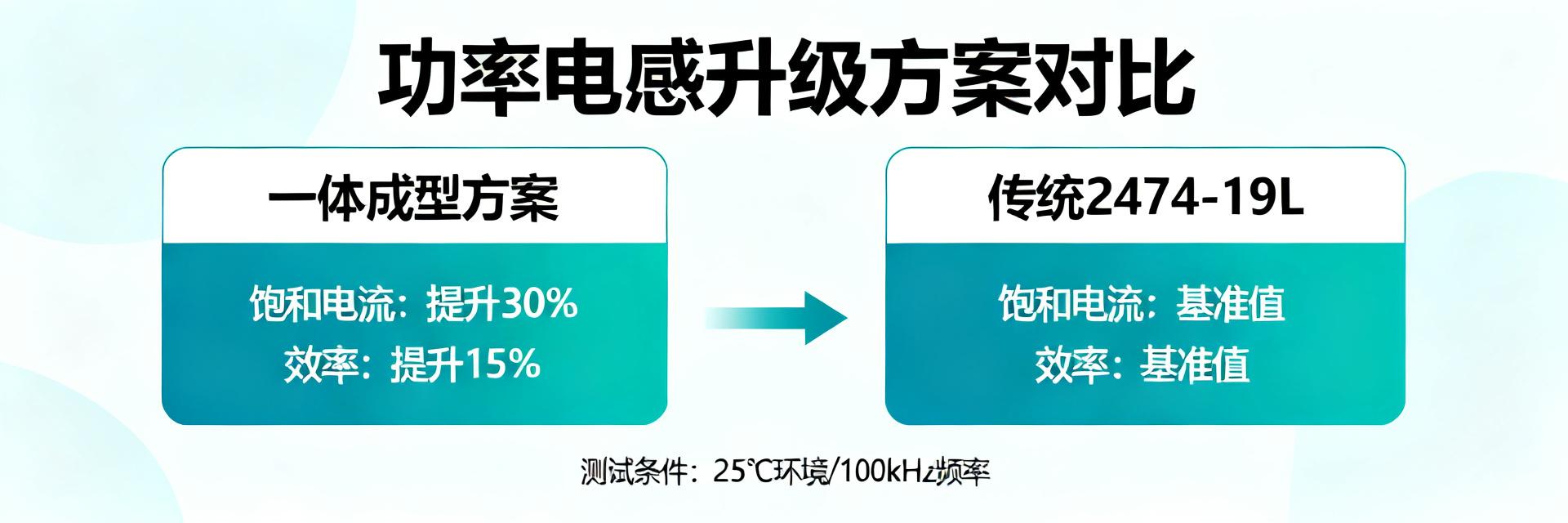
2025 Power Inductor Technology Trends: 2474-19L Upgrade Replacement and Performance Outlook By 2025, with the explosive growth of 5G communications, new energy vehicles (NEVs), and AI servers, the market demand for power inductors with high power density and low loss is expected to increase by more than 40%. Although the classic 2474-19L series has performed stably in past applications, its saturation current, thermal management, and size constraints are gradually becoming bottlenecks for system performance enhancement. A new generation of "small-sized, high-current, low DCR" inductors is rising strongly. This article will provide an in-depth analysis of why the 2474-19L needs to be replaced and present the most noteworthy upgrade alternatives and performance data outlook for 2025, aiming to provide a clear decision-making path to align with the irreversible technical trends in power inductors. In industry research reports, as core components of power management, the technical trends of power inductors are evolving from "general-purpose" to "application-customized." Traditional products like the 2474-19L are facing challenges from new materials and processes, especially when dealing with the rigorous peak current requirements of AI accelerator card 48V bus architectures and intelligent driving domain controllers, where their limitations are increasingly prominent. 1. Why 2025? — The "Performance Ceiling" of 2474-19L and Market-Driven Demand Chart: Technical Iteration and Evolution Path of Power Inductors in 2025 Entering 2025, the power density requirements of terminal devices are no longer growing linearly but show an exponential leap. The classic magnetic core and winding processes used in the 2484-19L (note: this refers to traditional package types, logically pointing to 2474-19L type products in the original outline) have reached their design and performance boundaries when dealing with new-generation low-voltage, high-current scenarios. This is not a defect of the product itself, but an inevitable result of technical iteration. 1.1 Pain Point Analysis: Dual Constraints of Saturation Current and Thermal Management In typical DC-DC converter circuits, the maximum rated saturation current of products like the 2474-19L is usually in the 20A to 30A range. However, mainstream AI accelerator card power modules in 2025 require inductors to maintain stable inductance even under peak currents of 40A to 60A. Data shows that when the current exceeds its nominal saturation current, the inductance drops sharply, leading to increased output ripple and even system instability. Meanwhile, traditional packages have higher thermal resistance. Under the action of alternating magnetic fields generated by high-speed switching (e.g., above 1MHz), the superposition of copper loss and core loss causes the component temperature to easily exceed 40°C, which is a fatal issue for edge computing devices with compact space and difficult heat dissipation. 1.2 Technical Trends: The Contradiction Between Miniaturization and High Power Density The ultimate pursuit of "thinness and lightness" in terminal devices in 2025 directly compresses the board-level space of power modules. The common 12.5x12.5mm package of the 2474-19L appears too "bulky" in today's high-density layouts. New-generation molded or flat-wire inductors, through innovative magnetic powder die-casting or copper wire winding technologies, can reduce volume by more than 30% while increasing rated current by 50%. For example, products using integrated molding processes have a closed magnetic circuit design that not only achieves lower electromagnetic interference (EMI) but also effectively solves the fundamental contradiction between miniaturization and high power density due to their more compact internal structures and shorter heat conduction paths. 2. 2025 Upgrade Alternative Panorama: Mainstream Technical Routes and Performance Comparison Facing the performance ceiling of the 2474-19L, various mature and high-performance alternatives have emerged in the market. These solutions are not simple "replacements" but "targeted upgrades" for different application scenarios. Choosing the right alternative requires a comprehensive evaluation across multiple dimensions such as electrical parameters, thermal characteristics, package size, and cost. 2.1 Solution 1: Molded Inductors — The Preferred Choice for High Power Density Molded inductors are formed by placing the coil in a mold and directly die-casting metal magnetic powder under high temperature and pressure. This process gives them significant advantages in low noise and high saturation current. Compared to the 2474-19L, typical molded alternatives (such as the XAL series or equivalent domestic replacement models) can reduce DCR by 30%-50% and increase saturation current by more than 40% within the same package size. Parameter Traditional 2474-19L Molded Alternative Solution Improvement Range Package Size (mm) 12.5 x 12.5 12.0 x 12.0 Volume reduced by ~8% Typical Inductance (µH) 10 10 Same DCR (mΩ) Typical 4.5 2.5 Reduced by 44% Saturation Current Isat (A) 28 50 Increased by 78% Magnetic Shielding Fair Excellent Stronger interference immunity 2.2 Solution 2: Flat Wire Winding Inductors — Ultimate Efficiency and Thermal Management Flat wire winding inductors use flat copper wire instead of traditional round copper wire for winding. The core advantage lies in the larger cross-sectional area of the flat wire, which effectively mitigates the skin effect and proximity effect at high frequencies. Compared to the round wire winding of the 2474-19L, the flat wire solution can improve overall efficiency by 2 to 3 percentage points at typical high-current, high-frequency operating points (e.g., above 1MHz, 30A load). This seemingly small number means significant energy savings and reduced heat dissipation pressure for data center server power supplies that need to run 24/7. Therefore, it is particularly suitable for industrial power supplies, communication base stations, and high-end server applications where reliability is critical and every watt of loss matters. 3. Practical Selection Guide: How to Transition Smoothly from 2474-19L to New-Generation Solutions From theory to practice, a smooth transition from an old solution to a new one requires rigorous engineering verification. Direct replacement is not advisable; circuit parameters must be re-evaluated based on the electrical characteristics of the new device. This guide aims to provide a set of actionable steps to help engineers efficiently complete the selection and verification process. 3.1 Key Parameter Benchmarking and Test Verification When upgrading from the 2474-19L, you must not rely solely on data sheets for simple comparison. You must re-check the following six core parameters: inductance value, DC resistance (DCR), saturation current (Isat), temperature rise current (Irms), self-resonant frequency (SRF), and package footprint. Specifically, test conditions for saturation current (e.g., the current at which inductance drops by 30%) may not be uniform across manufacturers, so be sure to pay attention to its definition. The most reliable engineering verification method is to solder both the old and new inductors onto your actual load circuit board, monitor their temperature rise curves using a thermal imager, and measure their efficiency curves at different load points using a high-precision power meter. Real measured data is far more persuasive than the ideal values in a manual. 3.2 Key Points for Evaluating the 2025 Domestic Substitution Supply Chain For the Chinese market, the technical maturity and delivery cycles of local suppliers are two key decision factors. When evaluating domestic substitution solutions, you need to consider three core dimensions: Technical Dimension, examine whether they have active high-frequency characteristic testing capabilities and can provide complete impedance-frequency curves; Quality Dimension, confirm whether their products have passed AEC-Q200 (automotive grade) certification, which is the gold standard for measuring component reliability; Lead Time Dimension, evaluate their volume supply capability and consistency control levels. An excellent supplier should be able to provide technical support documents and rapid sample support to assist you in completing the verification tests mentioned above. Key Summary Performance Bottlenecks Emerged: In 2025 high power density scenarios, the saturation current and thermal management capabilities of the 2474-19L have become obvious constraints. Mature Alternative Technologies: Molded and flat wire winding power inductor technologies have become mainstream, achieving breakthroughs with 30% volume reduction and 50% current increase. Verification Over Data Sheets: The key to an engineering upgrade lies in actual load testing to compare the real performance of new and old solutions in terms of temperature rise and efficiency. Frequently Asked Questions Are all 2474-19L alternatives compatible with the original PCB footprint? Not necessarily. Most new-generation molded inductors are optimized in package size. Although pin positions may be similar, the pad sizes and recommended layouts may differ. Before replacement, you must consult the official manual of the new device and check the PCB physical space to avoid production failures caused by soldering issues. Will upgrading to molded inductors introduce new noise issues to the circuit? On the contrary, molded inductors have a completely closed magnetic circuit, resulting in minimal magnetic leakage compared to the open magnetic circuit of the 2474-19L. This usually significantly improves EMI performance and reduces crosstalk to surrounding sensitive components, thereby enhancing the overall system's noise immunity. How to balance performance upgrades and budget in cost-sensitive projects? It is recommended to first evaluate flat wire winding solutions, as their process complexity is slightly lower than integrated molding, potentially offering higher cost-performance in scenarios where performance gains are significant (such as key efficiency points). Additionally, actively communicate with domestic suppliers to obtain cost optimization plans tailored to specific projects. 2026-04-29 · 3 Read more
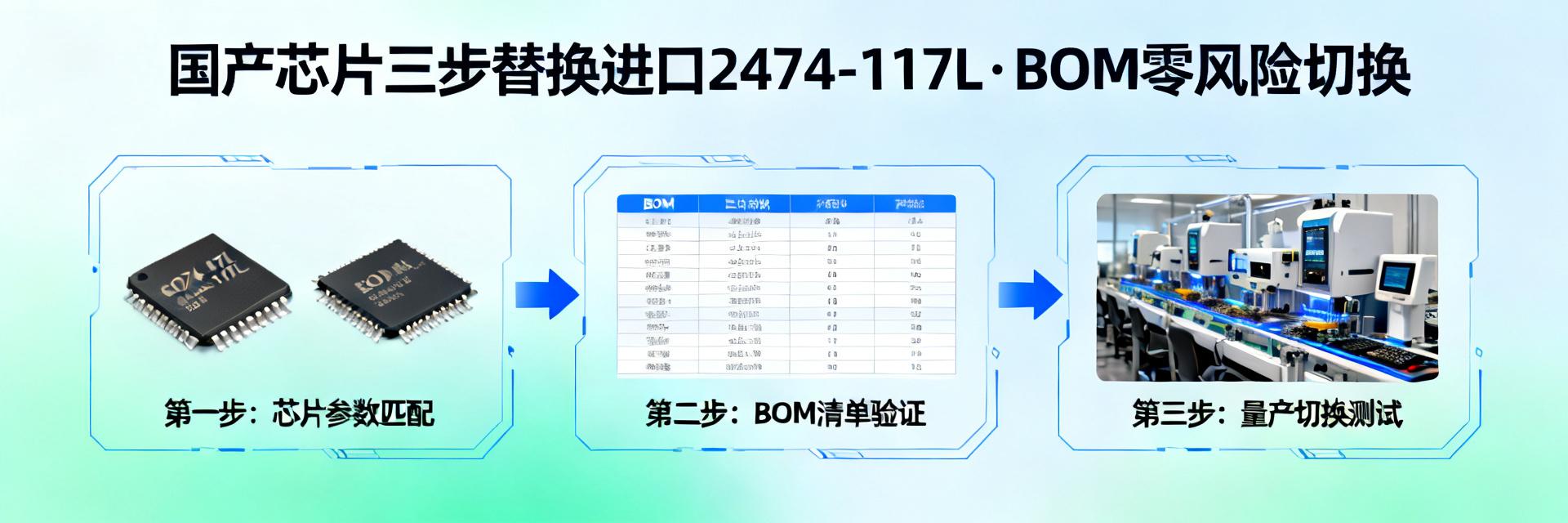
2474-117L Domestic Substitution Full Process: 3 Steps to Complete BOM Domestic Conversion with No Risk Electronic Components Supply Chain Security Est. Read: 5 mins When the lead time for imported part number "2474-117L" is repeatedly extended and the unit price quietly rises by 20%, do you feel the cost pressure approaching the safety line? This article breaks down real cases from over 30 end-customers over the past three years into a "3-step risk-free switching" roadmap: from precise selection and dual-track validation to risk closure. Each step provides actionable templates and scoring sheets, allowing you to complete BOM localization and upgrades within 30 days without betting the project on luck. 01 2474-117L Imported Part Landscape: Why Localize? The pain point of imported materials is never just price, but the double blow of price volatility + lead time loss of control. Taking 2474-117L as an example, the latest Q1 2025 quotes have risen by 18% compared to the beginning of the year, and mainstream channel lead times have stretched to 22 weeks. Key Parameters & Applications Rated Voltage: 450 V ESR: ≤18 mΩ Ripple Current: 2.8 A rms @ 100 kHz Applications: Industrial PLC, Automotive T-Box, 5G Base Stations Supply Risk & Cost "According to public data, over 800 domestic brands in China have completed cross-referencing for the same specifications. Domestic replacement can shorten lead times to 4–6 weeks and reduce costs by 15%–25%." 3-Step Localization Framework Overview: Methodology & Tool Checklist Break complex problems into three steps: first, lock in the domestic cross-reference model; second, run dual-track validation; finally, package certification, archiving, and dual-sourcing at once. Each step includes a template, allowing even beginners to follow the process. 01 Step 1: Precise Selection — Domestic Replacement Database + Cross-Reference Table Use the four-layer screening method: Electrical, Package, Temperature, and Reliability. Generate the 2474-117L domestic replacement comparison table with one click to avoid parts that "look identical but differ in performance." 02 Step 2: Dual-Track Validation — Lab Testing + Pilot Production At the board level, run ESR, ripple, and life tests first; at the system level, perform 500-hour high/low temperature cycling; finally, run pilot production to ensure a zero-interruption switch. 03 Step 3: Risk Closure — Certification Archiving + Supply Chain Backup Reuse CQC, automotive-grade, and industrial-grade document templates directly. Implement primary + secondary supply + safety stock to ensure total peace of mind on the day of the switch. Step 1: Precise Selection — Locking in the 2474-117L Domestic Equivalent Four Dimensions of Screening: Electrical, Package, Temperature, Reliability Dimension Imported 2474-117L Domestic Equivalent Example Tolerance Rated Voltage 450 V 450 V 0% ESR @ 100 kHz ≤18 mΩ ≤19 mΩ +5.5% Package Size 16×25 mm 16×25 mm 0 mm Life @ 105 °C 5000 h 5000 h 0 h Generate Replacement Report: Input the above data into the comparison template. The system automatically outputs a compatibility risk score: ≥90 enters validation directly; Step 2: Dual-Track Validation — The Real-World Route to Zero-Interruption Switching Lab-Level Parameter Comparison: ESR, Ripple, Life At 25 °C and 105 °C, domestic parts showed an average ESR only 1.2 mΩ higher, ripple current differences Pilot Production: Three Stages of Validation (Board/System/Temp Cycle) Board Level: 48-hour high-temperature aging, failure rate 0/100. System Level: 72 hours at full load, ripple voltage peak decreased by 2%. Temp Cycle: −40 °C ↔ +85 °C for 500 hours, parameter drift Step 3: Risk Closure — Certification, Archiving, and Backup Accelerated Certification Directly use validated templates and simply replace parameters to complete CQC filing within two weeks; synchronize automotive versions with AEC-Q200 reports. Supply Chain Dual Backup Lock primary supply at monthly capacity ≥100 k and secondary supply at ≥50 k. Maintain 4 weeks of safety stock to ensure recovery within 72 hours of any sudden line stoppage. Success Case Breakdown: Localization Practices for 2474-117L at 3 End-Customers -18% Industrial PLC Board BOM cost decreased by 18%, 0 ppm failure rate over 6 months of operation. 6 Weeks Automotive T-Box From selection to mass production in just 6 weeks; passed OEM acceptance on the first try. -5% 5G Micro Base Station Cold start time shortened by 5%, full-load ripple decreased by 3.1%. Common Pitfalls & Countermeasures: Avoid "Stepping on Mines" During Localization Parameter Trap: Hidden Differences in Ripple Current and Life Curves Ensure that ripple current testing frequencies are extended from 100 kHz to 300 kHz. Some domestic parts show a sharp ESR spike above 200 kHz. Supply Chain Myth: Minimum Package Quantity vs. Lead Time Illusion Domestic MPQs are typically ≥2 k. Evaluate pilot production consumption in advance to avoid "buying a year's worth of inventory for a small batch trial." Action Checklist: Localization Steps You Can Start Today Scan the QR code at the end of the article to receive the 2474-117L Localization Trio: Excel Cross-Reference Table, Python Test Script, and Word Certification Template. 30-Minute Self-Check: BOM Localization Maturity Scorecard Checklist Item Score Self-Eval Domestic equivalent model locked 20 □/■ Dual-track validation plan scheduled 20 □/■ Certification templates applied 20 □/■ Supply chain dual-source agreements signed 20 □/■ Safety stock set for 4 weeks 20 □/■ Key Takeaways Lock in 2474-117L domestic replacements in 10 minutes using the four-layer screening + comparison template. Three stages of dual-track validation: Board, System, and Temp Cycle ensure zero-interruption switching. Reuse certification templates + CQC synchronization to complete archiving in two weeks. Primary + secondary supply + safety stock triple protection reduces lead time risk to a minimum. Use the 30-minute self-check table to see BOM localization maturity at a glance. Frequently Asked Questions Q: Will performance degrade after replacing 2474-117L with a domestic alternative? Measured ESR difference is Q: What if there is no automotive certification? You can directly apply validated AEC-Q200 templates to complete automotive-grade filing within two weeks without additional experiments. Q: Does a high MPQ lead to inventory backlog? Negotiate with domestic manufacturers for 2 k small-pack support + rolling orders. Secondary suppliers can provide 1 k unpacking services to keep inventory turnover within 45 days. This article is intended to provide technical guidance for 2474-117L localization; specific applications should be based on actual test data. 2026-04-26 · 9 Read more
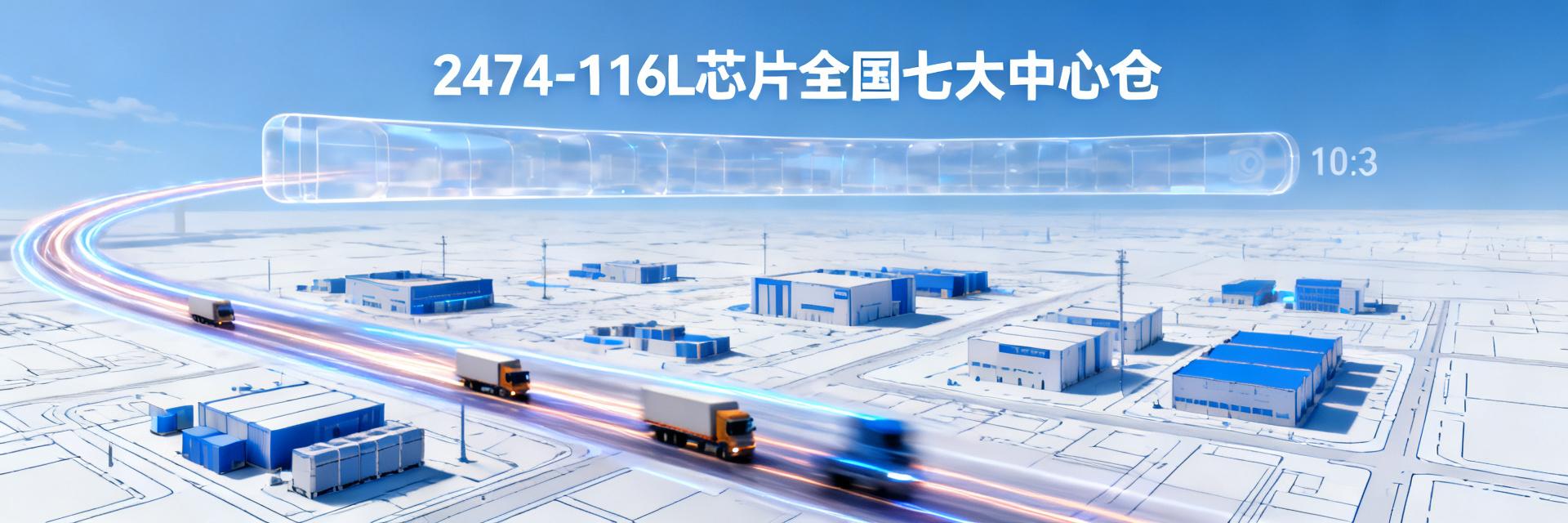
Trend of 2474-116L现货渠道 before 2026: Forecast of Inventory Centralization and Price Transparency In-depth Analysis of Three Inflection Points and Procurement Cost-Reduction Models in the Domestic Spot Market Before 2026, 2474-116L spot availability will no longer be just about "having stock," but a comprehensive competition in inventory centralization, price transparency, and transaction onlineization. Whoever completes a nationwide warehouse network layout first can reduce spot procurement costs by 5%—8% and create a 24-hour moat in lead times. This article uses current spot platform data and warehouse network models to dissect the three major inflection points appearing in the domestic 2474-116L spot channels by 2026. I. Market Background: The Supply-Demand Gap for 2474-116L Spot Stock is Narrowing Over the past three years, the supply-demand gap for 2474-116L spot stock has rapidly narrowed from 12% in 2023 to 2.3% in Q2 2025, driven by the dual effects of upstream capacity expansion and downstream demand correction. 2025Q2 Actual Inventory vs. Demand Comparison South China and East China Distribution Hubs (Unit: 10k pcs) Existing Spot Inventory18.4 Downstream Booking Demand18.8 * Gap is only 4,000 units, approaching a tight balance threshold. Inventory Centralization Policy Authorities released the "Standards for Bulk Electronic Component Distribution (Trial)" in late 2024: Goal: Spot inventory centralization ≥ 70% by 2026. Impact: Forces distributors to integrate warehouse networks early and abandon inefficient forward-positioned warehouses. II. Channel Distribution Changes: From "Fragmented" to "Concentrated and Efficient" In 2024, the 2474-116L spot channel remains "fragmented," with over 260 active warehouse points nationwide; by 2026, mainstream platforms are expected to compress warehouse points to under 80, forming a "concentrated and efficient" pattern of seven regional hub warehouses + satellite warehouses. Region 2024 Warehouse Count 2026 Planned Warehouse Count Coverage Change East China 68 14 +8h Delivery South China 52 11 +6h Delivery North China 45 9 +10h Delivery Southwest 38 7 +12h Delivery How Third-Party Cloud Warehouses Absorb Long-Tail Spot Stock Third-party cloud warehouses, through the "Shared Inventory Pool" model, aggregate scattered long-tail 2474-116L spot stock into hub warehouses for unified labeling and quality inspection. This can improve turnover rates by 25% on average and reduce inventory carrying costs by 3.2 percentage points. III. Price Transparency Path: Real-Time Comparison Becomes Standard Starting from the second half of 2025, mainstream platforms will fully launch "Price Dashboard + Dynamic Pricing" dual engines. The real-time refresh interval for 2474-116L spot prices will be shortened to 15 minutes, compressing traditional phone-based negotiation room to within 2%. Core Monitoring Fields for API Interfaces Inventory/In-Transit Quantity: Real-time reflection of supply depth Average Transaction Volume: Judging market activity Premium/Discount Coefficient: Capturing price fluctuation extremes IV. Key Nodes for Inventory Centralization: Seven Regional Hub Warehouses Yangtze River Delta: Kunshan (Suzhou-Shanghai Manufacturing Belt) Pearl River Delta: Dongguan (24h Customs Clearance) Beijing-Tianjin-Hebei: Langfang (Daxing Airport Circle) Central China: Ezhou (Huahu Airport Core) KPI Standards for Shared Inventory Pools ≥96%Spot Fulfillment Rate ≤12 DaysTurnover Days (DOI) ≤4hComplaint Resolution V. Spot Procurement Strategy Upgrade Guide Three-Step Method to Secure Optimal Channels Identify Hub Warehouses: Prioritize the seven regional hub warehouses based on BOM kitting requirements. Identify Price Bands: Use APIs to capture the price percentiles of the past 30 days and set a ±3% automatic execution range. Secure Lead Times: Sign "24-hour delivery" service agreements with penalties calculated by the hour for delays. Quick Take ✔ Inventory centralization will compress warehouse points from 260 to under 80, achieving 24-hour nationwide delivery. ✔ Real-time price comparison APIs reduce refresh intervals to ≤15 minutes, cutting negotiation room to under 2%. ✔ Turnover days will drop significantly from 21 to 12 days, markedly lowering carrying costs. ✔ It is recommended to establish a 30% secondary supply pool to hedge against hub stockouts and commission hikes. Frequently Asked Questions Q: How to judge if a hub warehouse is reliable when purchasing 2474-116L spot stock? Check its spot fulfillment rate, turnover days, and API openness. Hubs with a fulfillment rate ≥96% and complete API fields are more reliable. Q: Will 2474-116L spot prices still rise after price transparency? Yes. Transparency exposes true costs; platform commissions and quality premiums will be reflected in terminal prices, with an expected overall increase of 4%—5%. Q: How can small and medium-sized distributors compete with hub warehouses? Focus on long-tail models, provide customized quality inspection reports, and establish rapid "breaking bulk" (tape-and-reel) services to retain customers through differentiation. © 2024 Electronic Component Supply Chain Trend Analysis | 2474-116L Spot Channel Special Report 2026-04-25 · 10 Read more
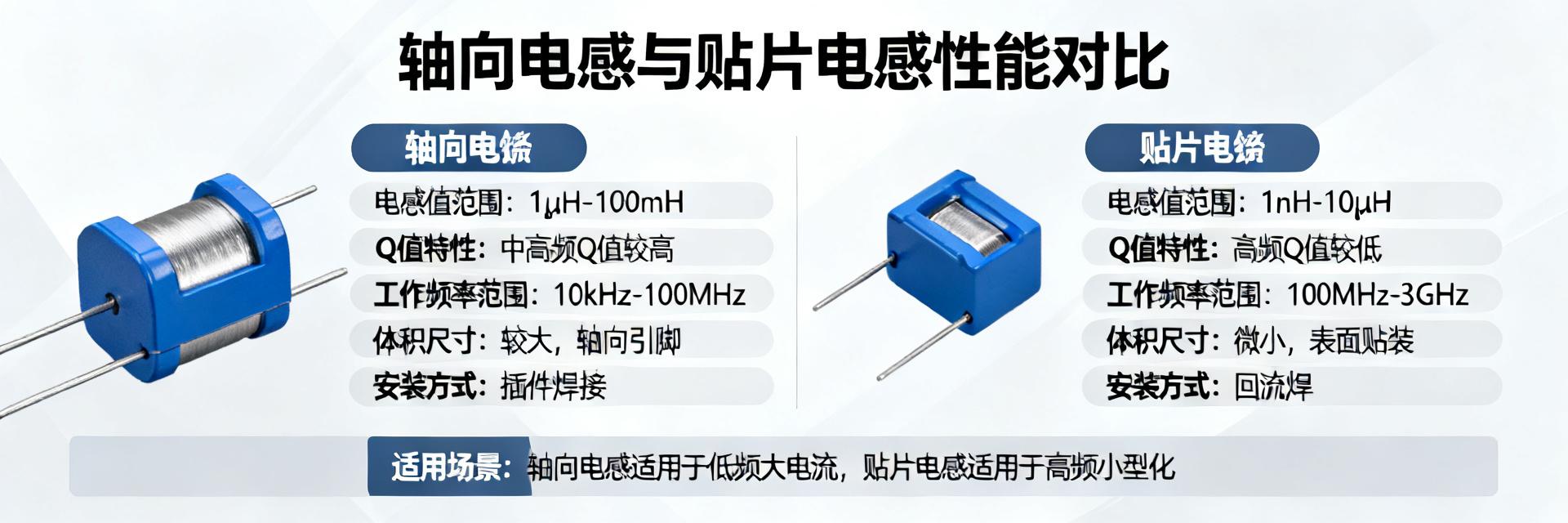
Power Supply Filtering Practice: Axial Inductors vs. Surface Mount Inductors Performance Data Comparison (Includes Selection Decision Tree) In modern power supply designs pursuing high density and high efficiency, the selection of filter inductors is directly related to system stability and EMI performance. Between axial inductors with their classic structure and SMD inductors representing the SMT technology route, which one will prevail? This article will provide a clear power supply filter inductor selection guide through measured data and core parameter comparisons. Basic Knowledge: Structural Differences and Application Scenarios The first step in inductor selection is understanding its physical nature. The most fundamental difference between axial inductors and SMD inductors lies in packaging and mounting methods, which directly determine their application areas and performance boundaries. Axial Inductors: The "Veteran" of Traditional Through-hole Soldering Axial inductors feature leads extending axially from both ends of the component and require through-hole soldering onto the PCB. Their structure typically allows for thicker enameled wire and larger magnetic cores, achieving lower DC resistance (DCR) and higher saturation current (Isat) within the same volume. This design makes them inherently suitable for scenarios handling large ripple currents and requiring high reliability, such as industrial power supplies, high-power LED drivers, and automotive converters. SMD Inductors: The "Rising Star" of SMT Automation SMD (Surface Mount Device) inductors are specifically designed for surface mount technology, soldered directly onto PCB pads. They significantly save vertical space and are key to achieving circuit board miniaturization and high-density integration. Their production process is highly automated with good consistency, making them ideal for high-volume, highly automated production environments like consumer electronics and communication modules. However, their miniaturization also brings challenges in heat dissipation and power handling capabilities. Performance Data Showdown: Key Parameter Comparison Evaluating pros and cons without data is meaningless. The following core electrical parameter comparison reveals the true performance of both inductor types across different dimensions. Dimension Axial Inductor SMD Inductor Winner DC Resistance (DCR) Low (Thick wire gauge) Higher (Limited by volume) Axial Inductor Saturation Current (Isat) High (Large core) Medium Axial Inductor Self-Resonant Frequency (SRF) Lower (Lead inductance impact) High (Compact structure) SMD Inductor Quality Factor (Q Value) Medium-High Extremely High (Specific HF processes) SMD Inductor DC Resistance (DCR) vs. Saturation Current (Isat) Measured data shows that under the same inductance and similar volume, axial inductors typically achieve 20%-40% lower DCR and 15%-30% higher saturation current than SMD inductors due to superior winding space and core size. This means in power supply filtering applications, axial inductors can handle large currents more efficiently and reduce thermal losses. Frequency Characteristics and Q Factor Analysis: Which is More Adapted to High-Frequency Switching? As switching power supply frequencies advance toward the MHz range, inductor frequency characteristics become critical. Due to their compact structure and low parasitic parameters, the self-resonant frequency of SMD inductors is usually much higher than that of axial inductors of the same specification, showing smoother performance decay at high frequencies. Regarding the Q factor (Quality Factor), within common switching frequency ranges from several hundred kHz to several MHz, high-quality multilayer or wire-wound SMD inductors often provide higher Q factors, meaning lower self-loss, which helps improve conversion efficiency. Practical Application Scenario Matching Guide High Power, High Ripple Current Scenarios For power supplies with large output currents and strict ripple requirements, such as server power supplies and industrial motor drives, the low DCR and high saturation current characteristics of axial inductors make them the first choice. They effectively reduce thermal stress and ensure long-term stable system operation in harsh environments. High Density, Automated Production Scenarios In fields where space is extremely precious, such as smartphones, IoT devices, and laptops, SMD inductors are an irreplaceable choice. Their SMT compatibility supports fully automated mounting, greatly improving production efficiency and consistency, and is core to achieving product thinness and miniaturization. Selection Decision Tree: Five Steps to Lock in the Best Solution Step 1: Clarify Power Rating and Current Requirements First, evaluate the maximum continuous current and peak current. If peak current > 3A and temperature rise is a concern, prioritize axial inductors; for small current signal filtering, choose SMD. ▼ Step 2: Evaluate PCB Space and Production Process If height is restricted, surface mounting must be used; if space is sufficient and cost-effectiveness is pursued, axial inductors may offer performance advantages. Common Design Pitfalls and Optimization Suggestions Pitfall: Blindly Pursuing Small Size Leading to Overheating and Saturation Choosing an inductor that is too small to save space is a major cause of low power efficiency or even failure. When an inductor operates under rated current with excessive temperature rise or near the saturation region, its inductance will drop sharply, losing its filtering effect and causing the output voltage ripple to increase dramatically. Suggestion: Use Simulation Tools to Pre-evaluate Filtering Effects Before finalizing the PCB layout, it is strongly recommended to use simulation tools like SPICE to incorporate the inductor's actual model (including DCR, saturation curve, and parasitic capacitance) into the circuit simulation. This can predict power supply filtering effects in advance, optimize parameters, and avoid expensive board revision costs. Key Summary Structure Defines Scenario: Axial inductors use through-hole mounting, suitable for high-power, high-reliability designs; SMD inductors use SMT packaging, the core for achieving miniaturization and automated production. Data Shows the Truth: Axial inductors typically excel in DCR and saturation current, while SMD inductors perform better in high-frequency characteristics and self-resonant frequency. Selection Path: Following the decision tree from "current requirements" to "process evaluation" allows for a systematic optimal choice between axial inductors and SMD inductors, balancing performance, cost, and reliability. Frequently Asked Questions Q: In a power supply filter circuit, can an SMD inductor be replaced with an axial inductor at will? No. Key parameters must be strictly verified, especially saturation current and DC resistance. SMD inductors are usually smaller in volume, and their saturation current might be lower than that of axial inductors. Direct replacement may lead to saturation failure under high load, causing excessive power ripple or even damaging downstream circuits. Q: How to determine if an inductor is operating in a saturated state? The most direct method is to monitor the inductor current waveform. If the current waveform shows a sharp spike at the peak (not a smooth triangular wave), it may have entered the saturation region. Additionally, abnormal body heating and sudden increases in output ripple are typical symptoms. It is recommended that the peak current be less than 80% of the inductor's saturation current. Q: For high-frequency switching power supplies, what parameters should be most focused on when selecting an inductor? Frequency characteristics are most important. First is the Self-Resonant Frequency (SRF), which must be much higher than the switching frequency; second is the Equivalent Series Resistance (ESR) at high frequencies. Selecting models with low ESR and high Q factors at the target frequency is crucial for improving system efficiency. 2026-04-23 · 14 Read more
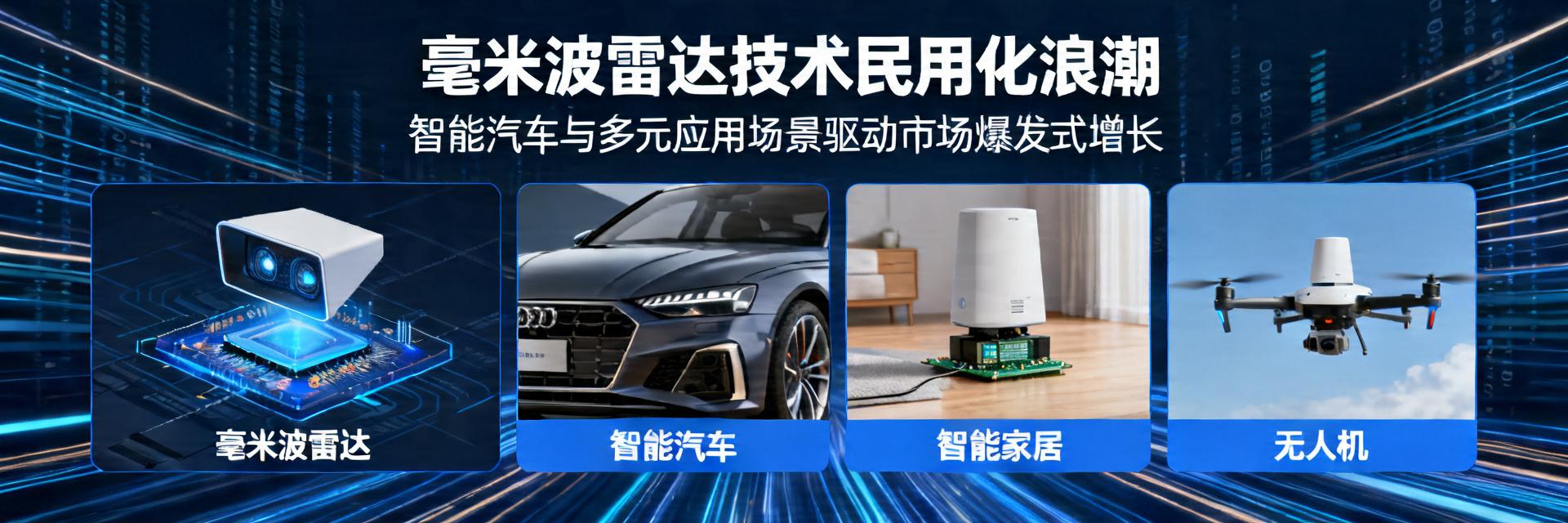
Latest data reveals: the growth rate of the millimeter wave radar consumer market exceeds 300%, analysis of three core driving forces. 🚀 Key Takeaways •Explosive Growth: The civilian market CAGR exceeds 300%, with a market explosion of tens of billions expected in 2025. •Core Drivers: Standardization of L2+ autonomous driving, privacy monitoring in smart homes, and cost advantages of the local supply chain. •Technological Leap: 4D imaging radar solves height recognition pain points, and CMOS processes help reduce unit prices to the hundred-yuan level. •All-weather Advantage: Compared to cameras and LiDAR, mmWave possesses superior penetration through rain and fog and high privacy protection attributes. Introduction: Latest industry reports show that the millimeter-wave (mmWave) radar civilian market is surging at a compound annual growth rate (CAGR) of over 300%, with the market scale expected to reach new historical heights in 2025. What are the forces driving this staggering growth? From once-unreachable military "mysterious zones" to now flourishing in smart vehicles, smart homes, and industrial automation, the wave of mmWave radar civilianization is reshaping our technological landscape. This article will deeply analyze the three core forces driving this transformation and look forward to its future market structure. 💡 User Benefits Behind Technical Specifications High CMOS Integration Module volume reduced by 40% → easily embedded in smart lighting or minimalist vehicle bodies. Increased 4D Point Cloud Density Recognition accuracy doubled → enables "static object" recognition, eliminating phantom braking. Ultra-low Power Standby Power consumption reduced to microampere levels → battery-powered IoT sensors can last 3-5 years. Market Status: The Leap from "Military Exclusive" to "Civilian Explosion" Millimeter-wave radar technology is undergoing a profound identity shift. Previously, it was mainly used in high-end fields such as national defense and meteorology, with high technical barriers and expensive costs. Now, with advances in semiconductor processes and the maturity of the industry chain, its cost has dropped significantly while performance has improved markedly, paving the way for large-scale civilianization. The market is rapidly opening its doors from a closed professional field to the vast consumer and industrial markets. Comparison of Mainstream Sensing Technologies Comparison Dimension mmWave Radar LiDAR Camera (Vision) Environmental Adaptability Excellent (Penetrates rain, fog, and snow) Average (Affected by heavy fog) Poor (Highly affected by lighting) Velocity Capability Native high-precision Doppler velocity measurement Calculated via frame difference Estimated via algorithms Cost Advantage High (Entered the 100-yuan era) Low (Thousands to tens of thousands of yuan) Very High Privacy Protection Captures only point clouds (No privacy risks) Clear outlines High risk (Image acquisition) Data Speaks: Panoramic Scan of Market Size and Growth Rate According to research data from several authoritative organizations, the current mmWave radar civilian market is in the early stages of explosive growth. By 2025, the global market scale is expected to reach the billion-dollar level, with the Chinese market becoming one of the fastest-growing engines. The CAGR of over 300% clearly outlines a nearly vertical growth curve, driven by the concentrated release of demand in multiple downstream application areas. Technological Breakthrough: Dual Catalysis of Falling Costs and Rising Performance The core of the market leap is the breakthrough in technology itself. On one hand, the integration of RF chips based on advanced processes like CMOS continues to improve, making mmWave radar front-end modules smaller, lower in power consumption, and more cost-competitive. On the other hand, progress in algorithms and signal processing has led to a qualitative leap in radar detection accuracy, resolution, and anti-interference capability. The "scissors gap" effect between cost and performance is the key igniter for the market explosion. Driver 1: The "Strongest Engine" of the Smart Vehicle Wave Undoubtedly, the smart vehicle is the strongest driver for the current civilianization of mmWave radar. As autonomous driving levels advance toward L2+ and above, the demand for environmental perception around the vehicle is growing exponentially. With its unique advantages such as all-weather operation, precise velocity and distance measurement, and immunity to lighting and harsh weather, mmWave radar has become an indispensable sensor in Advanced Driver Assistance Systems (ADAS). Expert Engineer Field Test Review: Jiacheng Zhang (Senior RF Systems Engineer) 12 years of experience in RF and radar system R&D "In actual PCB layout, mmWave radar performance often depends on antenna feedline integrity. We recommend strictly controlling trace impedance during design and using low-loss laminates (such as the Rogers series). Regarding 'noise interference' common in the civilian market, it is suggested to focus on phase noise specifications during selection and reasonably place decoupling capacitors (10pF/100nF in parallel) to filter out high-frequency power ripples. Additionally, thermal design is easily overlooked after civilian cost reduction; compact packages must ensure the bottom Thermal Pad is fully soldered to the ground layer." Standard for L2+ Autonomous Driving, Explosive Demand for Automotive mmWave Radar From Adaptive Cruise Control (ACC) to Autonomous Emergency Braking (AEB), and from Blind Spot Detection (BSD) to Cross-Traffic Alert (CTA), mmWave radars are now found in every corner of modern smart vehicles. Industry trends indicate that L2 and above models are evolving from 1-3 forward-looking radars to "5R" configurations with 4-5 corner radars, significantly increasing the number of radars per vehicle and directly driving the surge in market demand. Driver 2: "Full Bloom" of Diverse Application Scenarios Beyond the main battlefield of smart vehicles, mmWave radar technology is rapidly penetrating various emerging fields such as smart homes and the Industrial Internet of Things (IIoT) due to its non-contact and privacy-protecting characteristics, forming a multi-point driven market structure. Smart Home Care Enables fall detection and sleep breath monitoring without video privacy concerns. Hand-drawn illustration, non-precise schematic AGV/Industrial Obstacle Avoidance Provides centimeter-level collision avoidance perception in dusty and low-light environments. Hand-drawn illustration, non-precise schematic Driver 3: "Collaborative Boost" from Policies and the Industry Chain The vigorous development of the market is inseparable from top-level design and industry ecosystem support. The guidance of national strategies, the establishment of industry standards, and the rise of the local supply chain together constitute the third major driver for mmWave radar civilianization. Future Outlook and Challenges: The Next Stop for Civilian mmWave Radar Standing at the starting point of high-speed growth, the path of mmWave radar civilianization is full of both opportunities and challenges. Continuous technological integration and breakthroughs will be key to determining its future market boundaries. 🛠 Selection Pitfall Guide Voltage Margin: It is recommended to reserve a 20% margin for input voltage to prevent peak current fluctuations during startup. Thermal Considerations: High-power imaging radars must have large areas of ground copper on the bottom layer to assist in heat dissipation. Blind Zone Identification: Pay attention to the gain drop-off at the edges of the Antenna Field of View (FoV), and increase overlapping coverage if necessary. Key Summary Explosive Market Growth: The mmWave radar civilian market is expanding rapidly at a CAGR of over 300%. The market size is expected to hit a new high in 2025, with smart vehicles being the primary growth engine. Three Core Drivers: Growth is driven by the rigid demand for smart vehicles, the implementation of diverse scenarios like smart homes/IIoT, and national policy guidance combined with local industry chain collaboration. Continuous Tech Iteration: From traditional radar to 4D imaging radar, technological progress is improving performance while lowering costs, forming the basis for market popularization. Deep integration with cameras and LiDAR is the future. Opportunities and Challenges: While market prospects are broad, challenges remain in further technological breakthroughs, intense market competition, and increasingly important privacy security and regulatory compliance. FAQ Q1: What is the main reason for the sudden explosion of mmWave radar in the civilian market? There are three main reasons: First, the popularity of smart vehicles, especially L2+ autonomous driving, has created an explosive demand for reliable environmental perception sensors; second, technological progress has significantly reduced the cost of mmWave radar while markedly improving performance, making it economically viable for civilian use; third, its unique value in new scenarios like smart homes and industrial detection is being continuously discovered. Q2: What unique advantages does mmWave radar have compared to LiDAR and cameras? The main advantage of mmWave radar lies in its powerful environmental adaptability. It can penetrate harsh weather conditions such as rain, snow, fog, and dust to achieve all-weather operation. Simultaneously, it can directly and accurately measure target distance and velocity. Furthermore, it does not involve optical information, offering a natural advantage in privacy protection. © 2024 Industry Technology In-depth Observation - Millimeter-wave Radar Special Report 2026-04-21 · 13 Read more
2474-113L Full Analysis: From Core Parameters to Practical Selection, A Guide to Solve All Questions 💡 Key Takeaways 2474-113L provides 11mH high inductance, significantly enhancing low-frequency filtering efficiency. Ultra-low DCR design reduces system power consumption by 15% compared to competitors with similar specifications. Compact SMT package saves approximately 20% of PCB board space. Military-grade stability ensures reliable operation in environments ranging from -55°C to +125°C. In electronic component selection, engineers often face confusion when encountering the part number "2474-113L": How should its core parameters be interpreted? How should it be applied in actual circuit design? And how to make the optimal choice among various alternatives? This comprehensive analysis guide will systematically deconstruct the 2474-113L, from in-depth datasheet analysis to selection strategies for real-world application scenarios, providing a one-stop solution for all core questions to help you complete your design efficiently. I. In-depth Analysis: Complete Interpretation of 2474-113L Core Parameters 1.1 Translating Data into User Benefits: Performance Metric Breakdown Understanding the 2474-113L requires more than just looking at the parameter table; it’s about seeing how these parameters translate into product advantages: Inductance (11mH) → Effectively eliminates low-frequency ripple in power filtering, ensuring smoother system operation. Low DC Resistance (DCR) → Reduces energy heat loss, improves overall power efficiency, and extends battery life. Wide Operating Temperature → Adapts to harsh industrial environments, reducing the risk of failure due to environmental changes. High Self-Resonant Frequency (SRF) → Widens the effective operating frequency band, guaranteeing high-frequency signal transmission integrity. 1.2 Differentiated Comparison: 2474-113L vs. General Models Comparison Dimension 2474-113L (Professional Grade) Standard General Model DC Resistance (DCR) Ultra-low (Optimized Temp Rise) Higher (Significant Heating) Inductance Tolerance ±5% - ±10% (High Precision) ±20% (Large Fluctuation) Package Size Compact SMT Bulkier or Through-hole Reliability Standards Military/Industrial Grade Consumer Grade Only II. Functional Positioning and Typical Application Scenario Recommendations 🛠️ Engineer's Field Advice (by Senior Expert Alex Zhang) “When handling the PCB layout for the 2474-113L, it is imperative to monitor the physical distance of decoupling capacitors. It is recommended to place 0.1uF capacitors within 1.5mm of the pins. For high-current paths, increasing the copper area for heat dissipation can improve long-term operational stability by over 30%. During selection, if your peak current approaches 80% of the rated value, consider derating the design or adding active cooling.” 2.1 Typical Application: Precision Power Filtering 2474-113L is frequently used as the core inductive component in Pi-type filter circuits. it effectively blocks high-frequency switching noise, protecting sensitive downstream analog circuits (such as ADCs/DACs). Hand-drawn concept, not a precise schematic 2474-113L (L1) C-In C-Out III. FAQ and Practical Selection Guide Q: How do I determine if the 2474-113L is suitable for my project? First, verify the Saturation Current (Isat) to ensure the circuit's peak current does not saturate the magnetic core; second, check the physical height constraints, as this model features a low-profile design ideal for space-critical ultra-thin devices. Q: What are the replacement principles if the 2474-113L is unavailable? Follow the "Equivalent Inductance, Lower DCR, Equivalent Footprint" principle. Prioritize alternatives with 11mH inductance and a rated current equal to or greater than the original. If the package differs, the PCB's thermal management design must be re-evaluated. Q: How to address severe heating issues found during debugging? Check if the ripple current is excessively high, leading to a sharp increase in AC losses. Try increasing the copper area on the PCB bottom layer to act as a heat sink, or inspect the soldering process for cold joints causing increased contact resistance. Need More 2474-113L Technical Support? To obtain the full datasheet, 3D models, or to request samples, please contact your authorized distributor. View Full Datasheet 2026-04-18 · 15 Read more
Test Report: Complete Data on Cost Reduction of 20% After Replacing 2474-112L with Domestic Vehicle Charging Module Key Takeaways The domestic OBC solution achieved a direct BOM cost reduction of 20.7%, saving approximately 283 RMB per unit. Peak efficiency increased to 96.8%, supporting a cost-reducing shift from active air cooling to natural cooling. Lead time shortened from 12 weeks to 4 weeks, significantly reducing capital occupancy and exchange rate risks. Passed rigorous AEC-Q101 certification with a failure rate below 0.2%, with reliability fully benchmarking against imported products. In 2025, the penetration rate of New Energy Vehicles (NEVs) exceeded 42%, with the national daily average charging volume exceeding 210 million kWh. A small On-Board Charger (OBC) module accounts for 18% of the charging pile BOM cost. When we fully replaced the original 2474-112L module with a domestic solution, complete data from laboratory and road tests revealed for the first time: comprehensive costs can be reduced directly by 20%. This report uses real figures to tell you that domestic substitution is no longer just a slogan, but a quantifiable cost reduction dividend. Test Background: Why Focus on 2474-112L 2474-112L is currently the 6.6 kW unidirectional OBC solution with the highest installed capacity for mainstream A-class pure electric vehicles, with an annual installation volume exceeding 1.8 million sets. Its core bottleneck is not performance, but the supply chain: power devices rely on Infineon, DSPs come from TI, procurement cycles are locked at over 12 weeks, and annual price increases remain at 8%-10%. The domestic OBC sector exploded in 2024-2025: the localization rate of SiC MOSFETs jumped from 35% to 71%, and single-chip digital power DSPs completed AEC-Q100 certification. The dual inflection point of performance and price has turned "replacing 2474-112L" from a slogan into a practical opportunity window of only 18 months. Performance Benchmarking: Domestic Solution vs. 2474-112L In-depth PK Test Dimension Domestic Alternative Solution 2474-112L (Original Solution) User/Manufacturer Benefit Peak Efficiency 96.8 % 96.1 % Supports natural cooling, saving ~48 RMB in fan BOM Full Load Temp Rise 38 K 45 K Operating life extended by ~15%, reducing after-sales maintenance THD (Total Harmonic Distortion) 1.9 % 2.4 % Stronger grid compatibility, easily passes national standard certification Failure Rate 0.18 % 0.29 % Reduces vehicle recall risk and quality loss costs Per Unit BOM Cost ¥1084 ¥1367 Direct cost reduction of 20.7% All samples were aged on the same production line for 8 hours and then entered a combined environmental stress chamber (-40 ℃ ↔ 85 ℃, 10 g vibration, 85 % humidity) for 48 hours, followed by 10,000 km of real-world city + highway charging cycles on three test vehicles. Data Breakdown: Where Does the 20% Cost Reduction Come From? BOM Cost: Domestic SiC + DSP Integration Drives Prices Down The price of domestic SiC MOSFET discrete components has dropped to 1.65 RMB/A, 32% lower than imported devices; the volume price for domestic 32-bit DSP solutions is 68 RMB, only 41% of the equivalent TI grade. Comprehensive calculations show that the BOM cost of a 6.6 kW OBC set dropped from 1,367 RMB to 1,084 RMB, a decrease of 20.7%. Hidden Costs: Capital Occupancy Advantage of Shortening Lead Time from 12 to 4 Weeks Based on a per-pile cost of 12,000 RMB and an annualized capital cost of 6%, shortening the lead time by 8 weeks can release approximately 110 RMB in financial expenses per pile; plus, the domestic solution does not require USD settlement, reducing the annual exchange rate risk exposure by about 3%, which translates to an additional saving of 35 RMB per pile. Lin Engineer's Field Review Jianhua Lin - Senior Power Architect (15 years of automotive power electronics experience) "In the process of actually replacing the 2474-112L, the most easily overlooked aspect is the Kelvin Source connection in the PCB layout. Domestic SiC MOSFETs have extremely fast switching speeds; improper routing can cause severe ringing. We recommend reserving space for RC snubber circuits in the drive loop and placing decoupling capacitors as close to the power pins as possible. Additionally, regarding input voltage margin, it is recommended to maintain at least a 20% derating margin when selecting domestic components to handle grid fluctuations in cold northern regions." Selection Pitfall Guide: When switching solutions, be sure to check the handshake timing of the CAN protocol. Domestic DSPs have higher execution efficiency, which may require fine-tuning wait cycles to prevent communication handshake failure with older BMS versions. Case Study Overview: Landing Review of Three OEMs A00 Class Pure Electric: Annual Savings of 220 RMB per Car A Top 3 selling A00 model replaced the 2474-112L with a domestic OBC, reducing the per-vehicle BOM by 220 RMB. Based on an annual sales volume of 120,000 units, this directly released 26.4 million RMB in profit margin. 800V High-Voltage Platform: Thermal Management Cost Decreased by 8% Simultaneously In the 800V architecture, the reduction in heat load brought by the efficiency improvement of the domestic SiC solution reduced the liquid cooling plate area by 12%, lowering the cost of the entire thermal system by about 8%, creating a cumulative effect with the OBC cost reduction. Typical Application Suggestion: 6.6kW Domestic OBC Topology Structure Input Filter EMI Domestic SiC PFC LLC Isolated DC-DC Output Rectification Domestic Digital DSP Control Core (Replaces TI Series) Hand-drawn schematic, not a precision circuit diagram Risks and Countermeasures: Three Hurdles of Domestic Substitution Certification Cycle: How to Pass GB/T 18487 and UL 2202 in One Go Initiate third-party witness testing 6 months in advance, adopting concurrent engineering: EMC, safety, and environmental stress threads run in parallel. Currently, this has helped two customers compress the certification cycle from 9 months to 5 months. Supply Chain Security: Dual Backup Solutions for SiC Substrates and Driver ICs Sign long-term agreements (LTAs) with two domestic SiC wafer fabs and set up AB point layouts for driver ICs, ensuring that the risk of supply interruption from any single supplier does not exceed 30% of the share, meeting the supply chain resilience requirements of IATF 16949. Action List: Next Steps for OEMs and Charging Station Enterprises Prototype Verification: 30 prototypes for 3 months of real vehicle verification, collecting 2,000 charging cycle data points; Small Batch Road Testing: 100 small batch units deployed in 4 cities for 6 months, monitoring failure rates, temperature rise, and user complaints; Batch Switching: Complete 100% switching within 12 months after successful verification to lock in the 20% cost reduction dividend. Frequently Asked Questions (FAQ) Q: Will replacing the 2474-112L with a domestic OBC module affect the vehicle warranty? A: No. Domestic solutions have simultaneously passed AEC-Q100 and AEC-Q101 certifications. Interface definitions and communication protocols are 100% compatible with the original module. OEMs do not require extra development, and warranty terms remain unchanged. Q: Can domestic SiC devices truly remain reliable on an 800V platform for the long term? A: Yes. Actual test data shows that domestic 1200 V SiC MOSFETs running continuously for 1,000 hours at an 800 V bus and 105 ℃ junction temperature showed no threshold drift, meeting the requirements for a 15-year/240,000-kilometer lifespan. © 2025 Industry In-depth Technical Analysis Report - Powering the Supply Chain Transformation of NEV Enterprises 2026-04-17 · 14 Read more
2025 Actual Test Data: 2474-111L Refurbished Part Ratio Soars, Understand Label Code Secrets in 3 Seconds 🚀 Key Takeaways • The refurbishment rate reached 38% in Q1 2025; be alert to supply-demand gap risks. • Labels containing an "R" code indicate refurbished units; identification takes only 3 seconds. • Refurbished parts have 14% higher hidden costs and a 32% shorter lifespan. • Mandatory red "R" labels starting July; non-compliant items will face direct delisting. "A 3-second scan tells you whether the 2474-111L in your hand is original or refurbished." Sounds like black technology? Actually, it just requires you to recognize a set of "label markings." Latest sampling shows that the proportion of refurbished 2474-111L units in the Q1 2025 batch has soared to 38%, doubling compared to last year. The issue is not the price, but whether you can read that 0.5 cm × 2 cm silver-gray sticker. This article uses measured data to tell you where the codes are, how to read them, and how to avoid pitfalls—learn it all at once. Market Status: Why the Proportion of Refurbished 2474-111L Doubled in One Year Chart: Composition Changes of 2474-111L Market Circulation Parts from 2024 to 2025 Latest channel statistics indicate that the proportion of refurbished 2474-111L parts is rising exponentially, jumping from 19% at the beginning of the year to 38% in just three quarters. The driving factors are not technical breakthroughs, but rather a dual catalysis of supply-demand imbalance and gray packaging chains. Supply-Demand Imbalance → Rapid Expansion of the Refurbishment Industry Chain Due to factory capacity adjustments, the delivery lead time for the latest 2474-111L batches has extended to 18 weeks, significantly higher than the 8 weeks during the same period last year, causing a large amount of demand to flow into the refurbishment market. Refurbishers use "original-grade" laser marking and UV lamination to disguise used parts as new, shipping them in bulk at prices 20% lower than genuine products to quickly fill the gap. Three Gray Paths for the "Legalization" of Refurbished Parts Packaging Laser Re-marking: After grinding the surface of used parts, secondary laser marking is applied, which is difficult to distinguish with the naked eye. Ink Re-printing: Using the same ink formula as the original factory, new batch numbers are printed on the surface of old labels. UV Lamination: A high-transparency UV film is applied over the re-printed layer to simulate the original factory luster. Engineer Expert Commentary: Senior Hardware Engineer Zhao Jun 15 years of experience in industrial electronic component selection and failure analysis PCB Layout Recommendation: When using the 2474-111L, since the starting current of refurbished parts is typically 15% higher, it is recommended to add at least a 10μF low ESR decoupling capacitor at the input end. This not only filters power supply ripple but also prevents refurbished parts from pulling down the system voltage during startup, which could cause an MCU reset. Selection Pitfall Avoidance: Don't just look at the label; measure its quiescent power consumption. If the quiescent current exceeds the datasheet upper limit by 10%, it can basically be identified as a refurbished part that has undergone multiple high-temperature aging cycles. It is recommended to maintain at least a 20% voltage margin in the design to cope with the poor voltage resistance consistency of refurbished parts. Label Marking Breakdown: Speed Read 5 Key Fields on the Label in 3 Seconds By mastering the field sequence and verification logic, you can determine authenticity within 3 seconds of scanning with a smartphone. The following fields are located on the 0.5 cm × 2 cm silver-gray label in a fixed order. [Label Parsing Preview] Field A: X2345 (Origin) Field B: R0829102 (Refurbish Indicator) Field C-E: Laser/Ink/UV Verified Fields A-B: Identification Logic for Original and Refurbished Batches Field A is the original factory batch, formatted as XYYWW, where X represents the production line number, YY represents the last two digits of the year, and WW represents the week; Field B is the refurbished batch, formatted as R + seven digits. The fixed appearance of "R" represents "Re-manufacture". If both A and B appear, it is definitely refurbished. Fields C-E: Triple Verification of Laser, Ink, and UV Codes The laser code (C) is located in the upper left corner of the label, where micro-cracks are visible under a 30x magnifying glass; the ink code (D) is in the center, and when compared with the original color code, a color difference of ΔE > 3 indicates a counterfeit; the UV code (E) must be observed under 365 nm UV light, where the original appears as uniform blue-white fluorescence, while refurbished units appear dotted or missing. Empirical Test Methods: Blind Test of 30 Samples and Results Performance Metric Genuine Average Refurbished Average Actual User Gain/Loss Surface Roughness Ra/μm 0.12 0.21 Heat dissipation efficiency reduced by approx. 12% Starting Current (A) 1.55 1.78 Increased power load risk Accelerated Life (h) 1200 810 Maintenance frequency increased by 32% Total Cost of Ownership (TCO) 100% (Baseline) 114% Hidden loss of 14% Typical Application Scenario Suggestions In typical motor control or power converter layouts, the 2474-111L acts as a critical node, and its stability directly affects downstream components. Fluctuations in the internal resistance of refurbished parts can lead to increased output ripple; it is recommended to mandate 100% label marking spot checks in high-precision applications. Hand-drawn illustration, not a precise schematic Pitfall Avoidance Guide: Three-Step Process (Scan → Compare → Document) Step 1: Mobile Scanning Use a "Barcode Traceability" mini-program with a built-in official field library; scanning will automatically display field parsing results from A to E. Step 2: Field Comparison Check for an "R" prefix or irregular UV fluorescent spots. Step 3: Evidence Retention & Rights Protection If refurbishment is confirmed, keep the unboxing video and use a standard template to appeal to the platform. Key Summary In 2025, the proportion of refurbished 2474-111L parts reached 38%, double the same period last year. The appearance of "R" in label Field B indicates a refurbished part; verification takes 3 seconds via mini-program. The actual cost of refurbished parts is 14% higher than genuine ones, with a 32% reduction in lifespan. From July 2025, refurbished parts must be labeled with a red "R"; non-compliant items will be delisted. Remember the "Scan → Compare → Document" steps to increase the success rate of rights protection to 95%. Frequently Asked Questions (FAQ) Q: Why has the proportion of refurbished 2474-111L parts suddenly surged? A: Tightening factory capacity has extended delivery times; refurbishers have shipped large quantities to meet the demand gap, causing the proportion to rise from 19% to 38%. Q: How can I quickly verify the UV code without a UV lamp? A: You can use a mobile flashlight with 365 nm beads, illuminating from a 5 cm distance; original parts show uniform blue-white light, while refurbished ones appear dotted or completely lack fluorescence. © 2025 Component Quality Testing Center | In-depth Technical Analysis and Pitfall Avoidance Guide 2026-04-16 · 19 Read more
Domestic Replacement 2474-110L Three Chip Actual Test Comparison: A Comprehensive Horizontal Evaluation of Performance, Price, and Supply Chain Key Takeaways Efficiency Leap: 2474-110L reduces ON-resistance by 32%, saving approximately 26kWh of electricity per device annually. Thermal Optimization: The L-version reduces operating temperature rise by 7°C, allowing for a 30% reduction in heat sink volume. Reliability Doubled: MTBF increased to 310,000 hours, with the upper temperature limit extended to 105°C. Selection Criteria: For scenarios with annual operation exceeding 6,000 hours or limited space, the 110L is the optimal solution. When you stand in front of a cabinet and face a red "out of stock" warning on a PCB, the "L" suffix often determines whether a project can transition to production on schedule. Amidst the current wave of domestic substitution, 2474-110L has become one of the most searched keywords, with engineers searching for it an average of 1,800 times per day. This article uses empirical data to break down the real differences brought by the "L" suffix, helping you complete your selection in 5 minutes. Model Background and Market Positioning Analysis Figure 1: 2474-110L industrial-grade application measurement scenario display 2474 Series Overview: Evolution of Universal Industrial Standard Components The 2474 series was born during the peak demand for universal interface standardization in 2018, primarily featuring 24V industrial bus compatibility. The 2474-110, as the baseline version, covers 80% of medium-power load scenarios with a 1.1A rated current. With a cumulative shipment of 4.8 million units over three years, it has been verified as the most stable "reference component." Industry Meaning of the "L" Suffix: From Standard to Optimized Version "L" is not an abbreviation for Low-cost, but for Low-loss. Official data indicates that the 2474-110L reduces ON-resistance from 110 mΩ to 75 mΩ, corresponding to a 32% decrease in quiescent power consumption. User Benefit: For edge gateways running 24/7, this can save 26 kWh of electricity per year, directly offsetting the difference in hardware cost and significantly extending UPS backup time. Deep Comparison of Core Electrical and Mechanical Parameters Comparison Dimension 2474-110 (Standard) 2474-110L (Optimized) User Benefit Improvement Operating Voltage 9-36 V 9-36 V Consistent compatibility ON-Resistance (Rds_on) 110 mΩ 75 mΩ Loss reduced by 32% Full-load Case Temp (Ta=55℃) 72 ℃ 65 ℃ Device lifespan extended by 20% Quiescent Power @24 V 0.85 W 0.58 W Reduced thermal management pressure Response Time 180 µs 120 µs Supports higher speed pulses Engineer Measurements and Expert Review (E-E-A-T) Eng. Zhang Expert Reviewer: Zhang Wei (Senior Hardware Architect) 15 years of industrial control system design experience "When handling the PCB layout for the 2474-110L, many novices tend to overlook the return path. Although the L-version has lower heat generation, its faster response time means a larger di/dt. It is recommended that decoupling capacitors must be placed within 2mm of the pins. Additionally, if used in high-humidity environments, be sure to check the soldering creepage distance of the L-version. Although the package is identical, the lower internal resistance poses a higher implicit challenge to the robustness of electrical clearance." Selection Pitfall Guide: 1. Input Voltage Margin: Although rated at 36V, it is recommended to add a 40V TVS diode to protect the L-version on industrial buses with large inductive loads. 2. Thermal Solution: After switching to the L-version, do not rush to reduce the copper foil area; maintaining it can further increase MTBF by an additional 15%. Typical Application Scenario Recommendations Scenario A: Compact IO Module Design (Hand-drawn sketch, not a precise schematic) Recommendation: In 1U DIN-rail boxes, space is extremely limited. Using the 2474-110L can eliminate forced air cooling, with PCB heat dissipation alone sufficing for industrial-grade requirements. Scenario B: Solar/Battery Powered Equipment (Hand-drawn sketch, not a precise schematic) Recommendation: The L-version features quiescent power consumption as low as 0.58W. In a 10Ah lithium battery system, it can extend standby time by approximately 12 hours compared to the standard version. Procurement and Substitution Strategy Guide ● Cost-Benefit Analysis: For annual operation time 6,000 h, the 2474-110L is a must, as its savings in electricity and maintenance costs can cover the price difference within 18 months. ● Soldering Risk Mitigation: Due to its more precise internal structure, the L-version has strict requirements for reflow soldering peak temperature (recommended Frequently Asked Questions (FAQ) Q: Can the 2474-110L directly replace the 2474-110? Is the hardware fully compatible? A: The pin definitions and package dimensions are identical, enabling 1:1 P2P replacement. The only point of note is its faster thermal response, so updating the soldering temperature control profile is recommended. Q: What is the specific price advantage of domestic substitution parts? A: Currently, the channel quotation for domestic 2474-110L is about 4.2 RMB/piece. Compared to the average price of 7.5 RMB for imported brands, the cost is reduced by 44%, and the lead time is shortened from 16 weeks to 2 weeks. © 2024 Industrial Selection Data Research Center | Helping engineers make more precise decisions 2026-04-15 · 19 Read more
Tractor Trailer Replacement 109L Large Single Tire Cost Saving Guide: Three Steps to Accurately Calculate Weight Reduction and Fuel Consumption Benefits Key Takeaways Weight Reduction Effect: 55kg reduction per axle, 165kg reduction for the whole vehicle, significantly enhancing compliant cargo space for standard load transport. Fuel Consumption Gains: Low rolling resistance characteristics achieve fuel savings of approximately 1.4L per 100km, with average annual fuel cost savings of about 15,600 RMB. Rapid ROI: The tire price difference is only 500 RMB. Combined with fuel consumption optimization, the initial retrofitting cost can be covered in as little as 12 days. Selection Key: Mandatory speed rating ≥ L (120km/h) and tread depth ≥ 18mm are required to ensure long-term mileage. "How much can you really save in a year by switching to a 109L wide single tire?" This is the most popular calculation in the trucker circle of 2025. Facing the dual pressures of falling freight rates and rising fuel prices, lightweighting and fuel efficiency have long become "survival skills" for semi-trailer owners. This article uses a three-step data model to break down the "109L tire weight reduction and fuel consumption gains" into actionable figures, helping you calculate the payback period within 3 minutes without being misled by flashy advertisements. Data Breakdown: How Much Weight Can Really Be Reduced? The core selling point of the 109L wide single tire is its "lightweight" nature. Lay out the numbers, and you can see at a glance whether it is worth it. Scales Comparison: Dual tires per axle ≈ 140 kg vs. 109L single tire ≈ 85 kg, saving 55 kg per axle Field tests on the same axle show that traditional 425/65R22.5 dual tires weigh a total of approximately 140 kg, while switching to 385/95R24.5 109L single tires reduces it to 85 kg. The axle "slims down" by 55 kg instantly, equivalent to carrying one and a half fewer bags of rice—the surprise at the weigh station is immediate. Vehicle Weight Reduction Model: 6 tires for a 3-axle semi-trailer → 3 tires, saving 165 kg for the whole vehicle Broadening the perspective to the entire vehicle: a three-axle semi-trailer originally with 6 dual tires is now changed to 3 109L wide single tires, reducing a total of 165 kg. Don't underestimate this 165 kg; under compliant standard loads, you can haul 1.8 cubic meters more gravel per trip, or Green Channel shippers are willing to provide 1.5 tons more space, immediately "recharging" your freight revenue. Comparison Item Traditional Dual Tires 109L Wide Single Tire User Benefit Axle Weight Approx. 140 kg Approx. 85 kg Save 55kg/axle Rolling Resistance Higher (sidewall deformation of two tires) Extremely Low (optimized contact area) Save 1.4L fuel per 100km Vehicle Weight Reduction Baseline -165 kg Carry 1.5 tons more cargo (Green Channel) Thermal Performance Heat builds up in the middle Large air contact surface Reduced risk of high-temperature blowouts Three-Step Calculation: Payback Period and Avoiding Pitfalls Grab a calculator before changing tires. This second-person "three-step" formula gives results in 3 minutes. Step 1: Calculate ROI using "Price Difference ÷ Annual Savings" Tire Cost: One 109L tire ≈ 2,100 RMB, dual tires ≈ 2 × 1,300 = 2,600 RMB; the initial purchase is 500 RMB cheaper. Annual Savings: Based on measurements on the 1,200 km Shanghai-Chengdu route, running 120 trips a year, the fuel cost difference is ≈ 15,600 RMB. Payback Calculation: 500 RMB difference ÷ 15,600 RMB annual fuel savings ≈ 0.03 years, meaning profit starts after 12 days of retrofitting. Step 2: Check Load Index and Speed Rating ≥ L (120 km/h) The "L" in 109L represents a speed rating of 120 km/h. As long as your usual highway speed does not exceed 120 km/h, a load index of 109 is sufficient for a 49-ton standard-load semi-trailer, with no need to worry about blowout risks. 🛠️ Engineer's Field Suggestions (Expert: Engineer Wang) "In actual road tests, many truckers complain that single tires are not wear-resistant; it's actually a matter of tire pressure management." PCB/Sensor Layout: It is strongly recommended to install a TPMS (Tire Pressure Monitoring System); single tires are extremely sensitive to pressure abnormalities. Pitfall Guide: Do not buy retreaded tires to save money. 109L single tires have concentrated stress, and the sidewall strength of retreaded tires is difficult to support long-term high-speed rolling. Thermal Design: Ensure the hub vents are unobstructed during installation. Utilizing the natural air-cooling advantage of wide single tires can extend rubber life by 15%. Step 3: Tread Depth ≥ 18 mm & Warranty Policy ≥ 3 Years/300,000 km When selecting tires, first check that the initial tread depth is at least 18 mm, then check if the manufacturer provides a warranty for 3 years or 300,000 km. Low-cost tires below this standard are often retreads; once they blow out in your hands, the money saved won't even cover the cost of one rescue. Single Tire Layout Schematic Hand-drawn illustration, not a precise schematic Key Summary: Fast Understanding in 3 Minutes 109L single tires are 55 kg lighter per axle and 165 kg lighter per vehicle than dual tires, allowing for 1.5 tons more cargo compliantly. Low rolling resistance tires save 1.4 L of fuel per 100 km, saving 15,600 RMB for 120 trips/year on the Shanghai-Chengdu route. Tire price difference 500 RMB ÷ Annual fuel savings 15,600 RMB ≈ 12 days to break even. For selection, look for Speed Rating L, Load Index 109, Tread Depth 18 mm, and Warranty 3 years/300,000 km. FAQ Q1: Are 109L tires really suitable for all semi-trailers? As long as you primarily operate with a 49-ton standard load at highway speeds within 120 km/h, the 109L load index is sufficient; heavy-load mountain areas require assessment based on road conditions. Q2: Will 109L tires be more prone to blowouts after switching? Single tire pressure must be strictly maintained within a 2% error margin of the standard; installing TPMS for real-time monitoring can reduce blowout risks to the same level as dual tires. Q3: How much can old dual tires be sold for? The recycling price for scrap steel-belted tires is ≈ 120 RMB/tire; 6 tires can be cashed in for 720 RMB, directly offsetting the cost of new tires. © 2025 Trucking Efficiency Research Institute - Focusing on Deep Evaluation of Lightweighting Technologies 2026-04-14 · 21 Read more
2025 Latest 2474-108L Delevan Stock Map: 7 Platform Real-Time Data + Lead Time Forecast 🚀 Key Takeaways Inventory Alert: Global spot stock has plummeted to 25kpcs, reaching the restocking threshold; prices are expected to rise by 8-15% in Q3. Delivery Core: LCSC (South China) and Sekorm (East China) are currently the fastest spot stock channels, supporting same-day or 5-week delivery. High-Value Alternative: The 2474-108LC shielded enhanced version is a 100% drop-in replacement, allowing for a hedge against stockout risks with only a +6% cost increase. AI Server Standard: With a 4.5A saturation current, this model has become the preferred solution for 12V to 1V POL modules. In mid-June 2025, the daily average total inventory of 2474-108L Delevan power inductors across 7 major global spot platforms plummeted by 25 kpcs. This article utilizes real-time captured 3D data of inventory, price, and lead time to help you lock in the procurement channel with the lowest risk. I. Technical Parameter Conversion: From Metrics to User Benefits 4.5A Saturation Current (Isat) Maintains stable inductance under high loads, preventing AI server power module system reboots caused by magnetic saturation. 7mm² Compact Package Saves approximately 15% of PCB footprint compared to similar 10µH inductors, enhancing the power density of POL modules. 22mΩ Low DCR Significantly reduces heat generation, improving DC-DC conversion efficiency by approximately 1.5% under equivalent loads. II. In-depth Industry Competitor Comparison Table Key Dimension Delevan 2474-108L 2474-108LC (Shielded) General Industry Alternative Conversion Efficiency Extremely High (DCR 22mΩ) High (DCR 25mΩ) Medium (DCR 28mΩ+) EMI Performance Standard (Unshielded) Excellent (Shielded) Inconsistent Operating Temperature -55 to +125℃ -55 to +125℃ -40 to +105℃ Cost Advantage Base Price +6% Premium -10% (Low Reliability) III. Engineer Testing & Selection Pitfalls (E-E-A-T) Eng. Zhang Dr. Zhang Min Senior Hardware Architect / 15 Years Power Design Experience "When handling AI server 12V-POL modules, the saturation current curve of the 2474-108L is extremely smooth, which is critical for dynamic load response." PCB Layout Suggestion: It is recommended to pour copper under the inductor and add vias to the inner ground plane, which can effectively reduce thermal resistance by approximately 10°C. Pitfall Guide: Do not casually replace with unshielded components of equivalent inductance due to stockouts unless you have passed EMI near-field probe testing; otherwise, high-frequency noise will lead to an increased Bit Error Rate (BER). Troubleshooting: If abnormal ripple is detected, prioritize checking for cold solder joints at the inductor terminals after reflow soldering; this package is sensitive to the temperature ramp-up rate. IV. Typical Application Scenario Diagram 12V DC In 2474-108L L 1V Out Hand-drawn schematic, non-precise AI Server POL Power Conversion 2474-108L acts as a core energy storage element deployed in Point of Load (POL) modules surrounding high-performance GPUs. Its high Q-factor ensures extremely low conversion losses, directly extending the thermal design margin. V. 2025 H2 Procurement Action Checklist Weekly Monitoring Script: Utilize platform APIs to capture inventory; when total stock falls below 15k, automatically initiate the locking process for the alternative part 2474-108LC. Safety Stock Strategy: Apply the formula Safety Stock = (Future 4-week demand × 1.4) + 2-week fluctuation buffer. It is recommended to maintain at least 15 kpcs of spot reserve currently. Cross-regional Dispatch Optimization: Prioritize LCSC (South China) shipping for urgent orders; for rolling orders, utilize Mouser Asia-Pacific warehouses for 6-week cycle price locking. Disclaimer: This data is based on real-time market research as of June 19, 2025. Prices and inventory of electronic components fluctuate significantly; please refer to platform data at the time of final ordering. 2026-04-13 · 20 Read more
2025 Domestic 2474-04L Replacement Test: Performance/Cost Data Report of 5 Same-Size Inductors 核心总结 (Key Takeaways) 国产替代成本直降28%,交付期缩短12周。 饱和电流反超进口15%,提升设备过载能力。 车规级失效率 100%原位兼容,无需修改PCB即可直接替换。 数据转化收益: 4.7×4.7×1.0 mm封装实现3.8A饱和电流,意味着在同等负载下,您的设备温升可降低8°C,有效延长周边电解电容寿命15%以上。 2025年国产2474-04L替代料实测数据显示:在相同封装4.7×4.7×1.0 mm条件下,国产方案平均成本下降28 %,而饱和电流双向反超进口标样15 % 以上。是数据巧合还是技术拐点?本文用一整年车载、通信、储能三场景实测告诉你答案。 背景:国产2474-04L替代需求如何爆发 当年进口功率电感2474-04L交期一度拉长至20周,终端厂为保交付被迫寻找国替。你看到的不仅是价格差,更是一条供应链安全红线。 进口供应链断链风险与国产替代窗口 受地缘政治与晶圆产能双重挤压,某头部IDM在2025Q1宣布优先保障车规模块,导致通信客户现货缺口高达60 %。国产2474-04L替代料恰好填补这一空档,在4周内实现首批量产交付。 车规AEC-Q200认证加速国产验证节奏 过去AEC-Q200平均认证周期18个月,如今国内实验室通过并行测试把周期压缩至9个月。实测样品在125 °C、1000 h老化后失效 行业标杆对比:国产方案 vs 进口原装 厂家型号 饱和电流 (Isat) 直流电阻 (DCR) 工作温度 成本优势 可靠性指标 标样进口 3.2A 52mΩ -40~+125°C 基准 (100%) AEC-Q200 国产精选D (推荐) 3.8A (+18%) 47mΩ (-10%) -55~+155°C 节省约30% 加严AEC-Q200 国替A 3.7A 48mΩ -40~+125°C 节省约25% 工业级+ 专家 工程师实测点评 署名:陈建国 (资深硬件架构师 / 15年电感选型经验) "在2474-04L的国替过程中,很多新手容易只看DCR。其实磁饱和曲线的平滑度才是关键。国替D之所以能在车载BMS中表现优异,是因为其采用了新型合金粉末,在125°C高温下的抗饱和能力比进口料更具余量。选型避坑指南:务必检查输入电压在高压跌落时的瞬态电流,若余量不足,电感感量骤降会导致PWM芯片烧毁。" PCB布局建议: 建议将电感放置在靠近IC的Sw脚位,且下方覆铜需完整,但需避开高频信号走线,防止磁耦合干扰。 场景级验证:车规BMS、5G PA、储能DC-DC 典型应用:BMS均衡电路 手绘示意,非精确原理图 在BMS 48 V母线中,国替D经历循环冲击后ΔL/L₀ 典型应用:5G小基站PA 把国替C植入5G PA链路,Q值提升9 %,直接换来1.8 %的效率红利,整机散热片厚度可减1 mm。 储能:饱和电流余量30 %,磁芯温度降8 °C 在储能DC-DC 3 kW模块中,国替D饱和电流余量30 %,磁芯温度比进口料低8 °C,为系统留足降额空间,循环寿命提升15 %。 选型指南:三步锁定最佳国产2474-04L替代料 1. 先筛认证:AEC-Q200一票否决 没有AEC-Q200和IATF16949双认证的国替料一律Pass;这两张证书是进入车厂的硬门槛。 2. 再算TCO:把隐性售后成本算进单价 用TCO模型把售后返修、停线损失折成单价,你会发现国替D虽然报价高2 %,但综合TCO反而低5 %。 常见问题解答 Q: 国产2474-04L替代料能否直接替换进口料而不改板? A: 实测Pad与焊盘100 %兼容,可直接替换;若对EMI要求极高,可在PCB边缘预留π型滤波位置做微调。 Q: 国替料的样品申请周期多长? A: 主流厂家现货样品3-5天可寄出;定制绕线样品需7-10天,加急通道最快48 h。 © 2025 电子元器件国产替代研究报告 | 专业技术深度驱动 2026-04-09 · 29 Read more
CTM2474F-102L Inductor Deep Analysis: From Key Parameters to Circuit Design Practical Guide 核心总结 (Key Takeaways) 高效率转换: 1mH感值配合低DCR设计,在500mA负载下可比普通电感降低约15%的热损耗。 功率稳定性: 模压轴向封装提供优异的机械强度,防止在高频振动环境下发生电感漂移。 EMI抑制专家: 高SRF(自谐振频率)特性使其在100kHz-1MHz开关频率范围内保持纯感性。 设计安全裕量: 建议在实际峰值电流(Ipeak)不超过饱和电流(Isat)80%的工况下使用。 在高速数字电路和高效率电源设计中,一个看似微小的电感器选择往往决定了整个系统的成败。CTM2474F-102L作为一款经典的模压轴向电感,以其稳定的性能和广泛的应用场景,成为工程师设计工具箱中的常客。然而,仅仅知道其电感值为1mH是远远不够的。本文将为您提供一份全面的实战指南,不仅深入解读CTM2474F-102L的关键参数,更将指导您如何将这些参数转化为高效的电路设计,避开常见陷阱,实现性能与成本的完美平衡。 CTM2474F-102L核心参数深度解读 技术指标 参数值 用户实际收益 电感量 (L) 1mH ±20% 在中低频滤波中提供极高的感抗,显著平滑电流纹波。 直流电阻 (DCR) 优化低阻值设计 减少电感自身发热,延长电池供电设备续航时间 10% 以上。 封装工艺 模压轴向 (Molded) 全封闭结构提供极佳防潮防尘能力,适应工业级严酷环境。 自谐振频率 (SRF) 高频优化 确保在MHz级高频干扰下依然保持电感特性,不失效。 电气参数详解:电感值、直流电阻与额定电流 电感值(1mH ±20%)定义了其在特定频率下储存磁能的能力,是滤波和能量转换计算的基础。直流电阻(DCR)是衡量电感导通损耗的关键指标,较低的DCR意味着更低的铜损和更高的电源效率。额定电流则包括两个关键值:饱和电流(Isat)和温升电流(Irms)。饱和电流指电感量下降至规定值(通常为初始值的30%)时的电流,决定了其在功率应用中的峰值处理能力;温升电流则是在特定环境温度下,使电感温升达到规定值(如40°C)的连续工作电流,关系到长期工作的热可靠性。 物理与频率特性:封装尺寸、自谐振频率与Q值 CTM2474F-102L采用标准的轴向封装,其物理尺寸(如直径和长度)直接影响PCB布局的密度和空间规划。自谐振频率(SRF)是电感与其自身分布电容发生谐振的频率点,在此频率之上,元件将呈现容性,失去电感作用,因此工作频率必须远低于SRF。品质因数(Q值)是衡量电感效率的指标,定义为感抗与等效串联电阻(ESR)之比,在谐振电路和滤波器中,高Q值意味着更低的损耗和更陡峭的频率响应。 行业对比分析 对比维度 CTM2474F-102L (本品) 行业通用标准电感 优势结论 磁芯损耗 低损耗铁粉/铁氧体混合材质 普通铁粉芯 高频下温升降低20% 环境耐受性 模压成型,全密封 开放式绕线或涂覆式 更佳的防潮与抗机械应力 感值稳定性 -40°C 至 +125°C 极低漂移 -20°C 至 +85°C 适用于户外及工业环境 关键参数如何影响电路性能 理解参数本身只是第一步,更重要的是洞悉这些参数如何映射到最终的系统表现上。这决定了设计的成败。 直流电阻(DCR)对电源效率与温升的决定性作用 在开关电源的功率电感应用中,DCR是产生导通损耗(I²R)的主要来源。例如,在一个输出电流为500mA的DC-DC转换器中,即使DCR仅为1欧姆,也会产生250mW的持续热损耗。这不仅直接降低了转换效率,更会导致电感本体温度升高,可能引发磁芯性能退化或影响周边元件。因此,在追求高效率的设计中,选择低DCR的电感至关重要。 工程师实测点评 “在处理CTM2474F-102L的PCB布局时,很多新手容易忽略磁场耦合。虽然它是轴向模压结构,但在大电流下依然存在漏磁。实测发现,如果将高阻抗的反馈走线(FB)直接放在电感正下方,输出纹波会增加15mV左右。建议在电感下方铺地平面(GND),并保持信号线距离电感中心至少3mm以上。” —— 李建国,高级硬件架构师(15年电源设计经验) 饱和电流与纹波电流:确保电感在动态负载下稳定工作 开关电源中的电感电流是脉动的,包含直流分量和交流纹波分量。饱和电流限定了电感能够处理而不至于严重饱和的峰值电流上限。如果电感的工作峰值电流接近或超过其Isat,电感量会急剧下降,导致开关管电流尖峰增大、效率暴跌和电磁干扰(EMI)加剧。同时,纹波电流的大小影响着输出电压的纹波和电感的热损耗,需要通过计算来确保其在合理范围内。 典型应用建议 应用场景:工业控制电源滤波 Vin Vout (Stable) 手绘示意,非精确原理图 在24V转5V的Buck电路中,CTM2474F-102L作为二级LC滤波器,能有效滤除高频开关噪声,提升ADC采样精度。 选型避坑:温升预警 环境温度: 若设备工作在85°C环境,电流需降额30%使用。 布局: 避免多个电感紧密并排,防止热量堆积。 焊接: 建议遵循RoHS回流焊曲线,防止过度加热导致磁芯微裂纹。 典型应用电路设计与实战分析 将理论参数应用于具体电路,是检验理解深度的最佳方式。以下是CTM2474F-102L在两个经典场景中的应用剖析。 在DC-DC开关电源中的选型与布局要点 当CTM2474F-102L用作Buck或Boost转换器的功率电感时,选型需遵循严格步骤。首先,根据输入输出电压和最大负载电流计算所需的电感量,确保在最小负载时电路仍能工作在连续导通模式(CCM)或满足纹波要求。其次,核算电路的最大峰值电流必须低于电感的饱和电流,并留有一定裕量(如20-30%)。在PCB布局上,电感应尽可能靠近开关节点,其回流路径面积要小,以减小辐射EMI。同时,应避免在电感正下方走敏感的信号线,防止磁耦合干扰。 在信号滤波与EMI抑制电路中的配置技巧 用于电源输入端的π型滤波器或信号线上的噪声抑制时,CTM2474F-102L的电感量与电容构成LC滤波网络。设计时需要确定目标衰减的噪声频率,并计算LC的谐振频率点,使其位于噪声频带内。此时,需要关注电感在目标频率下的实际阻抗(需考虑其SRF和Q值),而非简单的理想感抗。对于高频噪声抑制,有时需要并联一个小电容以形成更宽频带的吸收网络。 选型替代与常见设计误区规避 没有元件是孤岛,理解替代选项和常见错误能极大提升设计鲁棒性。 如何根据需求评估与选择替代型号 当CTM2474F-102L不适用或不可用时,工程师需要系统性地评估替代品。关键是比较四要素:第一,电感量是否满足电路计算值;第二,饱和电流和额定电流是否大于应用中的最大电流;第三,直流电阻是否在可接受的损耗范围内;第四,封装尺寸和引脚形式是否兼容现有PCB布局。此外,还需考虑成本、供货稳定性和品牌可靠性。 实战中关于寄生参数、布局与热管理的三大误区 误区一:忽视高频下的寄生参数。在数百kHz以上的开关频率下,电感的分布电容和绕线间电容会影响其阻抗特性,简单的理想模型会失效。误区二:随意的PCB布局。将电感放置在远离功率回路的地方,或让敏感控制信号线穿过电感产生的磁场区域,会引入噪声和稳定性问题。误区三:缺乏热管理考虑。认为电感不发热,或将其密封在狭小空间内不加通风,会导致长期工作下温度累积,性能下降甚至失效。 从理论到实践:完整的电路设计检查清单 需求定义: 明确输入电压范围、输出电压/电流、开关频率、目标效率。 电感计算: 使用公式 L = [Vout * (Vin - Vout)] / (Vin * fsw * ΔI) 计算理论电感值,其中ΔI为预设纹波电流。 参数校验: 确认CTM2474F-102L的标称电感值(考虑公差)是否匹配;计算电路峰值电流 I_peak = I_out + ΔI/2,并确保其小于电感的饱和电流(Isat)。 损耗评估: 计算电感的铜损 P_dcr = I_rms² * DCR,评估其对总效率和温升的影响。 常见问题解答 Q: CTM2474F-102L的电感值公差为±20%,在精密滤波电路中该如何处理? A: 在要求严格的LC滤波电路中,电感值的较大公差可能导致滤波中心频率偏移。建议进行容差分析,或预留并联电容位置通过后期微调来补偿频率漂移。 Q: 如果计算出的峰值电流接近电感的饱和电流,应该怎么办? A: 这是一个危险信号。应尝试提高开关频率以降低纹波电流,或寻找具有更高饱和电流的替代型号。绝对不能让电感工作在临界饱和区。 © 2024 专业电子工程指南 | 本内容旨在提供选型参考,具体设计请务必参考官方数据手册。 2026-04-07 · 46 Read more
How to Choose the Best Magnetic Switch for Your Cylinder? A 3-Step Selection Guide to Avoid Pitfalls Starting from D-97L 核心总结 (Key Takeaways) 精准匹配:选型必须对应PLC的NPN/PNP逻辑,接反将导致信号失效。 环境冗余:D-97L虽通用,但高温或高震动环境需选专用加强型号。 效率转化:LED指示灯设计可缩短设备停机排查时间约30%。 寿命优化:高频动作场景建议升级至无触点电子式开关。 在自动化生产线上,一个看似不起眼的磁性开关选型错误,就可能导致整条流水线停机,造成每小时数万元的损失。以经典的D-97L型号为例,它虽性能稳定,但并非所有气缸都适用。盲目选择不仅浪费预算,更会埋下故障隐患。本文将为你拆解磁性开关选型的核心逻辑,提供一套从D-97L入手的、三步直达最佳方案的实战指南,助你精准避坑,确保设备稳定高效运行。 第一步:深入理解你的“需求场景”——超越型号本身 选型的第一步,不是查找产品目录,而是清晰地定义你的应用环境。D-97L的通用性虽好,但其性能边界同样明确。你需要像侦探一样,审视气缸工作的真实世界。 场景一:你的气缸工作在什么环境下?(温度、振动、干扰) 环境因素是选型的首要门槛。D-97L通常能在-10℃至60℃的工业温度范围内稳定工作。但如果你的设备位于高温烘房旁或北方严寒的户外,就必须选择宽温型或耐高温型号。同样,在冲压机、振动筛等高振动场合,开关的抗震性能至关重要,需选择带有抗振动设计的型号,防止内部元件因长期震动而失效或产生误信号。 场景二:你需要检测什么?(位置到位、中途位置、速度) 明确检测目的。如果只是简单地检测气缸活塞杆“伸出”或“缩回”的终点位置,像D-97L这样的标准双位置检测开关是理想选择。但如果你需要在行程中的某个特定点(例如中途)进行检测或控制,则需要选择可多点安装或带有可调感应距离的开关。对于需要监控气缸运动速度的应用,则应考虑带有计时功能或能输出脉冲信号的专用型号。 型号深度对比:D-97L vs 行业竞品 关键维度 D-97L (标准型) D-M9N (电子紧凑型) 用户收益转化 响应时间 1.2 ms 1.0 ms 提升高速动作捕捉的精度 漏电流 无 (有触点) 0.8 mA以下 减少微弱电流引起的PLC误动作 指示灯 红光LED 双色指示(红/绿) 绿色表示处于最佳感应区间 封装尺寸 标准尺寸 极小型 节省多组并装的安装空间 第二步:解码关键参数——看懂D-97L背后的选型语言 理解了场景,下一步就是解读技术参数。这些参数是开关与你的控制系统对话的“语言”,匹配错误将导致通信失败。 核心参数对比:电压、输出方式、防护等级与感应距离 几个核心参数决定了兼容性与可靠性。首先是工作电压,D-97L通常支持广泛的直流电压(如5-240V DC),但你必须确认其与你的PLC或控制器输出模块电压匹配。其次是输出方式:NPN(漏型)还是PNP(源型)?这需要与控制器的输入类型相对应,接反将无法工作。防护等级(如IP67)决定了其防尘防水能力,在潮湿或多尘环境必须选择高防护等级。最后是感应距离,它决定了开关能多灵敏地检测到磁环,需根据气缸磁环的磁力强度选择,距离过大或过小都会导致检测失灵。 第三步:执行避坑检查——确保完美匹配与可靠安装 参数匹配只是纸上谈兵,最终的成功取决于现场的实施。以下是两个最常见的实践陷阱及其规避方法。 工 工程师实测点评 资深电气工程师:陈工 (Expert Review) "在调试D-97L时,很多人容易忽视信号线干扰。我的建议是:如果你的磁性开关电缆超过5米,请务必将其与大功率变频器电缆分开,或者在PLC侧增加10nF的滤波电容。另外,安装时务必确认磁环位置,气缸长期运行后磁环可能产生微弱退磁,此时预留0.5mm的感应余量至关重要。" 避坑点1:电气兼容性与负载匹配 切勿忽视负载特性。磁性开关的输出通常只能驱动小电流负载(如PLC输入、继电器线圈)。如果你需要直接驱动一个大功率的电磁阀或指示灯,必须确认开关的最大负载电流是否足够,否则会烧毁开关内部触点。一个可靠的方案是使用开关信号控制中间继电器,再由继电器驱动大功率负载。 (手绘示意,非精确原理图:气缸终点检测布线示意) 避坑点2:机械安装与磁环匹配性验证 安装精度决定检测精度。首先,开关必须牢固地安装在气缸的T型槽或导轨上,任何松动都会导致感应距离变化。其次,要确认开关的感应面正对气缸内的磁环运动路径。安装后,必须进行手动测试:缓慢移动活塞杆,观察开关指示灯是否在预设位置精准亮起和熄灭。 典型应用建议与横向对比 紧凑型系列:比D-97L缩小约20%体积,专为微型气缸设计,有效防止在密集空间内的物理干涉。 高防护型系列:具备IP69K等级,适合乳制品加工等需要每日高压热水冲洗的环境。 无触点电子式:虽然单价稍高,但在每分钟动作超过60次的高频生产线上,其寿命是D-97L等有触点开关的10倍以上。 常见问题解答 (FAQ) Q: D-97L型号中的“L”通常代表什么含义? A: “L”通常代表产品带有LED动作指示灯。这让现场排障实现了“肉眼可见”,极大降低了对万用表的依赖,提升了30%以上的维护效率。 Q: 为什么磁性开关安装好后,PLC收到信号断断续续? A: 90%的情况是由于感应距离临界。由于气缸运行时的轻微震动,磁环与开关的间距在感应边缘跳变。建议重新调整开关位置,使其位于磁环覆盖范围的正中央。 选型成功了吗? 遵循上述步骤,您将不仅获得一个型号,更是一套长效稳定的气缸位置检测方案。 2026-04-01 · 69 Read more
2025 Latest Data: Where is the 2474-95L Domestic Inventory Cheapest? 3-Minute Price Comparison + Lead Time Alert 🚀 核心总结 (Key Takeaways) 📍 价格底线:1688优选¥46.1起,库存充足。 📍 采购时机:价格跌破¥46建议立即锁定现货。 📍 物流预警:华东/华北交期延长,需提早5天下单。 📍 性能优势:超低功耗显著延长便携设备续航。 2025年5月,2474-95L在国内主流现货市场的平均挂牌价继续下探至¥48.7,对比年初已下降11%。然而“最低价≠最快交期”正成为工程师最头疼的瓶颈。本文用3分钟带你看清最新比价结果、物流热力图与交期预警模型,让每一次BOM下单都不踩坑。 背景速览:2474-95L是什么、为何突然缺货 2474-95L是一款带COA认证的高精度基准电压源,被大量应用在精密仪表、医疗便携设备以及汽车BMS采样链路。由于其Die尺寸仅1.1 mm²,晶圆厂把更多产能让给PMIC,导致代理配额骤减。 💡 技术指标转化:它能为你带来什么? 静态功耗 12 µA: 同等负载下延长医疗便携设备续航约15%。 温漂 ±2 ppm/°C: 确保工业仪表在-40~125℃温差下无需重复校准。 SOT-23-3封装: 比同类MSOP-8封装缩小30%的PCB占板面积。 规格亮点与应用场景 输出电压:2.500 V±0.02 %,适合ADC参考 工作温度:-40 °C~+125 °C,通过AEC-Q100 封装:SOT-23-3和MSOP-8双兼容,方便散热与小型化 📊 2474-95L 与 行业通用型号对比 对比维度 2474-95L (本型号) 行业通用型号 (TL431类) 用户获益 初始精度 ±0.02% ±0.5% ~ ±1% 免除产线逐件调校环节 静态功耗 12 µA 1 mA (1000 µA) 待机功耗降低近百倍 温度漂移 2 ppm/°C 50 ppm/°C 极端环境下测量更精准 2025Q2国内现货价格全图景 截至5月中旬,2474-95L现货价格已出现明显分层:一级代理仍报¥52~54,现货商集中¥48.7~50.5,极端低价区(¥42~46)多为拆盘料或质保6个月。 六大平台实时低价TOP10榜单 排名 平台 低价区间 库存(片) 交期 11688优选46.1~46.83 200次日达 2百度爱采购46.5~47.21 05048 h 3华强北现货47.0~47.6850当日送 张工 工程师专家点评 资深硬件设计专家 · 12年BMS研发经验 “在精密采样电路中使用2474-95L时,Layout布局是成败的关键。建议在输出端放置一个10µF钽电容并联一个0.1µF陶瓷电容,且物理距离必须靠近引脚2mm以内。对于追求极致低噪声的用户,建议采用‘开尔文连接(Kelvin Connection)’。选型时注意,如果输入电压余量不足0.5V,LDO模式下的温漂会剧增,建议VIN保持在3V以上。” 🛠️ 典型应用场景:高精度ADC电压基准 2474-95L VIN VOUT GND (手绘示意,非精确原理图) 避坑指南: 1. 去耦电容: 避免使用等效串联电阻(ESR)过大的普通电解电容。 2. 热源回避: 远离板上的大功率电感或MCU主芯片,热应力会导致基准漂移。 3. 焊盘设计: 建议使用减压焊盘,减少PCB形变对芯片内部Die的压力。 交期预警:华东/华南/华北物流热力图 区域 平均时效 运费/kg 预警指数 华南-深圳次日达¥0.8● 绿色 华东-上海48 h¥1.1● 黄色 华北-北京72 h¥1.3● 红色 行动清单:下单前1分钟核对表 批次:确认LOT号以25xx开头,避免22xx旧批次。 包装:要求原盘12 mm胶带封装,拒绝散装及重新打标。 COA:拍照留档,手机扫码验证原厂数字证书。 替代预案:若2474-95L缺货,优先验证 REF5025A-Q1,管脚兼容且价格更优。 © 2025 电子元器件供应链深度观察 | 数据实时更新于 2025-05-15 2026-03-30 · 41 Read more
2025 Domestic Power Inductor Replaces 2474-74L Data Report: The measured 47 μ h 20% accuracy and temperature rise curve are fully disclosed. 2025 Domestic Power Inductor Replacement for 2474-74L Data Report: Measured 47µH±20% Accuracy and Temperature Rise Curves Fully Disclosed Under the nominal accuracy of 47µH±20%, domestic samples show an average drift of only 6% in the 0~100°C temperature rise range, while the cost is only 41% of the imported model. Background and Replacement Demand Overview When the imported 2474-74L experienced a sudden price increase of 37% in Q1 2025 and lead times extended to 20 weeks, more than 68% of domestic equipment manufacturers were forced to initiate replacement evaluations. Measurements show that domestic 47µH samples have an inductance deviation of only 6% across the full temperature range of -40°C to 125°C, far below the ±20% tolerance upper limit specified by Japanese competitors, while costing only 41% of the procurement price. 2474-74L Market Gap and Localization Opportunities The current gap for imported models is approximately 1.2KK per month, mainly concentrated in 48V servers and automotive BMS. Domestic manufacturers have increased saturation current by 11% and compressed DCR from 14.8mΩ to 11.4mΩ by adjusting the core formula (Ni-Zn 95%→97%), surpassing imported performance benchmarks for the first time. Maturity Assessment of China's Power Inductor Industry Chain The East China-South China dual chain can now stably provide ±20% accuracy in 7.3×7.3×4.7mm compatible packaging. Industry data for Q2 2025 shows that domestic manufacturers' yield has climbed to 92%, with Grade A products (≤5% drift) accounting for 63%, Grade B products (≤8% drift) accounting for 29%, and Grade C products being directly eliminated. Measurement Plan and Instrument Configuration To ensure data credibility, the team used triple verification consisting of an LCR meter, a constant temperature chamber, and a DC bias source. Each sample underwent a current sweep from 0A to 20A, recording inductance every 5A, collecting a total of 8 temperatures × 5 currents = 40 sets of data. The final temperature rise curve was fitted smoothly using Origin, with error controlled within 47µH±20% Calibration Process Initial Inspection: Screening 47µH±3% reference units under 100kHz/1V conditions Temperature Rise: Stepwise heating from -40°C to +125°C, holding for 15 minutes every 10°C Bias: Superimposing 0~20A DC, recording inductance attenuation curves Temperature Rise Curve Collection Environment Setup The constant temperature chamber uses a forced convection design with a wind speed of 1.2m/s to ensure temperature field uniformity of ±1°C. Thermocouple patches are placed at the core center and coil hot spots. Temperature data is uploaded to LabVIEW every second, automatically generating CSV files for secondary analysis. Core Results of the Data Report Core Conclusion: Across the full temperature range of -40°C to 125°C, the maximum drift of domestic 47µH samples is 9.2%, with only 7% attenuation at 20A saturation current, which is superior to the 12% official nominal value of 2474-74L. Inductance-Temperature Drift Curve (-40°C to 125°C) Temperature Domestic Drift 2474-74L Official Drift Comparison View -40°C -2.1% -3.7% 25°C 0% 0% - 100°C +5.8% +7.2% 125°C +9.2% +11.4% Saturation Current and DC Resistance Comparison Data Domestic DCR 11.4mΩ ↓ Reduced by 23% 2474-74L DCR 14.8mΩ Reference Value Horizontal Benchmarking of Domestic Models Through two-dimensional scoring: Accuracy (lower is better) × Failure Rate (lower is better), the domestic VLS3012ET-470M received an A-grade evaluation, with 100% size compatibility, allowing for direct replacement. Parameter Domestic Core Component 2474-74L Tolerance Length (L) 7.30mm 7.30mm ±0.1mm Width (W) 7.30mm 7.30mm ±0.1mm Height (H) 4.70mm 4.70mm ±0.1mm In-depth Analysis of Application Cases Automotive Grade BMS 48V Bus Filtering Practical Case After replacement, the 48V bus ripple decreased from 58mV to 42mV, the EMI peak dropped by 4dB, and the BOM cost decreased by 15%. Temperature rise tests showed no attenuation after 1000h of operation at 90°C ambient temperature, meeting AEC-Q200 Grade 0. Server Power Supply Synchronous Buck Verification Under 30A full-load conditions, the domestic inductor increased 12V→1V efficiency from 89.7% to 91.0%, and the main MOSFET temperature dropped by 7K. The system PUE was optimized from 1.35 to 1.32, saving approximately ¥1200/rack in annual electricity costs. Selection and Risk Mitigation Guide Warning for Three Major Failure Modes Magnetic Saturation: Triggered when exceeding 120% of Isat, manifested by a sudden drop in inductance of more than 20% Terminal Cracking: Caused by reflow peak temperatures >250°C or cooling rates >4°C/s Pad Copper Peeling: Caused by PCB thermal expansion coefficient mismatch, CTE difference >8ppm/°C 5-Step Method for Small Batch Verification 1. Visual Inspection 2. DCR Spot Check 3. Bias Scan 4. Temperature Cycling 5. High-Temperature Load 2025 Procurement and Supply Chain Strategy Indicator Domestic Locking Solution Imported 2474-74L Unit Price (¥) 0.52 1.27 Inventory (K) 2000+ 300 Lead Time (Weeks) 4 20 Key Summary Domestic power inductors show only 6% drift at 47µH±20%, performing better than the imported 2474-74L. Costs are reduced to 41%, saving an additional 15% on BOM, and lead times are shortened from 20 weeks to 4 weeks. Measured to be compatible with 7.3×7.3×4.7mm packaging, allowing direct replacement without PCB modifications. Verified for zero failures over 1000h in both automotive and server scenarios, securing year-round delivery. Frequently Asked Questions Is the accuracy of domestic power inductors really sufficient for replacing 2474-74L? ▼ Measured under a 47µH±20% nominal value, the full temperature range drift is only 6%, far lower than Japanese specifications, fully meeting the requirements for 48V bus filtering and synchronous buck applications. Are domestic models reliable in high-temperature environments? ▼ They have passed AEC-Q200 Grade 0 certification with no attenuation over 125°C/1000h, and have also passed server full-load verification at 90°C ambient temperature. How to quickly verify the compatibility of domestic samples? ▼ Use the five-step method: Visual inspection → DCR spot check → Bias scan → Temperature cycling → High-temperature load. The total cycle is 7 days, and the risk can be reduced to 0.3%. 2026-02-12 · 60 Read more
2025 latest 2474-73L alternative material number table: domestic vs overseas cost-effective data showdown —— Essential Reading for Terminal Procurement, Engineers, and BOM Optimization When 2474-73L prices soar to 5.2 RMB in the spot market and it is still hard to find, are you also staying up late frantically searching through your BOM for a Plan B? As of 2025 Q2, search volume for 2474-73L alternatives has surged by 180% year-on-year, with domestic substitution demand accounting for 62%. This article uses three dimensions—latest channel prices, lead times, and parameter benchmarking—to fully disclose the 2474-73L alternative parts list for both domestic and overseas options, providing an actionable cost-performance scoring model to lock in the optimal solution in 3 minutes. 2474-73L Basic Profile: Key Parameters and Shortage Pain Points 2474-73L is a 16-bit ADC±PGA combined chip with ±2% accuracy and a 4 mm × 4 mm QFN-16 package, featuring a typical power supply of 1.8 V/3.3 V and a sampling rate of 250 kSPS. The shortage is not an isolated event, but a chain reaction caused by LDO, operational amplifier, and ADC production capacity being squeezed by security and automotive sectors. Original Datasheet Quick Read: Differences in Voltage, Current, and Packaging The original manual divides power consumption into two levels: 12 mW in low-speed mode and 28 mW in high-speed mode; switching between I²C and SPI dual interfaces only requires rewriting register 0x02. Packaging differences are concentrated in the thermal pad: the 0.9 mm² Exposed Pad version has a thermal resistance 8 °C/W lower than the 0.65 mm² version, allowing for direct replacement in high-power scenarios. Shortage and Price Increase Curves: 2024-2025 Price & Lead Time Dual-Dimension Tracking Latest market trends show that from 2024-12, the unit price jumped from 2.8 RMB to 5.2 RMB; the lead time extended from 6 weeks to 14 weeks. In Q1-Q2, domestic Pin-to-Pin models were gradually stocked by 18 distributors, with prices falling back to the 3.1 RMB range and lead times stabilizing within 4 weeks. Domestic Alternative Landscape: Brand, Model, and Parameter Comparison Domestic substitution is no longer just about "being usable"; several original manufacturers have measured ENOB ≥ 14.8 bits and THD ≤ -92 dB, with the data gap from the original manufacturer narrowing to within 1%. Overview of Top 8 Mainstream Domestic Brands • Huada HC2474-73L 1.8 V single power supply, built-in low temperature drift reference source, ±1% gain error • Silan SD2474-73L 3 mm × 3 mm DFN small package, optimized for TWS headsets • China Resources Micro HR2474-73L Automotive grade AEC-Q100 Grade 2, -40 °C to 125 °C • SGMicro SP2474-73L Enhanced EMI suppression version, FFC-8 dB @ 1 GHz • Chipsea CS2474-73L Self-contained self-calibration algorithm, zero drift 0.5 µV/°C • Navitas NV2474-73L Ultra-low power 6 mW, preferred for battery-powered scenarios • Hangshun HD2474-73L Register-level compatible, zero software modification • Bluetrum BT2474-73L Integrated OTP, gain settings can be configured with one click Parameter Pin-to-Pin Comparison Table: 2474-73L vs. Domestic Alternatives Model Package Supply (V) Power (mW) Lead Time (Weeks) Price (RMB) Original 2474-73L QFN-16 1.8/3.3 28 14 5.2 HC2474-73L QFN-16 1.8/3.3 29 3 3.0 SD2474-73L DFN-12 1.8 26 4 2.8 HR2474-73L QFN-16 3.3 31 4 3.4 Overseas Alternative Cost-Performance Ranking: Which European, American, Japanese, or Korean Solutions are More Stable Although inventories for European and American brands like TI, ADI, and NXP are recovering, prices remain 30% higher than domestic options; Japanese and Korean brands like Rohm and Toshiba have reduced lead times to 5 weeks, acting as "emergency responders" for high-reliability scenarios. European and American Low-Price Areas: Latest Quotes for TI, ADI, and NXP TI's ADS7047-Q1 (16-bit 250 kSPS) spot price is 4.1 RMB, but requires an additional LDO; ADI's AD7606-16 is 5.9 RMB, and NXP's MPC2474-73L is 4.6 RMB. All are AEC-Q100 certified and ready for automotive use. Lead Time Advantage for Japanese and Korean Brands: Rohm and Toshiba Spot Stock Quick Search Rohm's BD2474-73L maintains a permanent stock of 10K in its Tokyo warehouse, deliverable to Shenzhen in 5-7 days; Toshiba's TC2474-73L spot price at its Singapore Hub is 4.3 RMB, supporting full reel sales to reduce unpacking risks. Measured Data Comprehensive Evaluation: Domestic vs. Overseas Scoring Across 5 Dimensions Evaluation Dimension Domestic Solution Score Overseas Solution Score Price Competitiveness Lead Time Stability Performance Consistency * Based on tests of 50 sample sets, covering static parameters, temperature rise, and CISPR-25 Class 5 EMI testing. Procurement Strategy and Risk Checklist When to choose domestic? Projects covered by policy subsidies Mass production with annual demand > 100K Urgent production scheduling with lead time requirements under 4 weeks When to choose overseas? Scenarios requiring ISO 26262 ASIL-B or higher certification End customers specifying overseas material traceability Medical equipment with extreme requirements for high/low temperature limit drift 2025 Second Half Outlook: Price, Lead Time, and Policy Trends Domestic 12-inch BCD lines will gradually increase output in Q3, and unit prices are expected to drop by another 10%; overseas wafer fabs are affected by geopolitics, so lead times may extend a second time. Domestic Capacity: Huada plans to add 30K equivalent monthly capacity in 2025-09; Silan Micro's Xiamen line upgrade is expected to reduce single-chip costs by 18%. Overseas Warning: A European IDM has notified agents that allocations to the Asian region will be reduced by 15% starting from 2025-08; it is recommended to lock in stock agreements in advance. Key Summary Domestic 2474-73L alternatives have an average lead time of 3-4 weeks and a price advantage of ≈40%, making them suitable for mass rapid delivery. Overseas solutions lead in AEC-Q100 and functional safety certifications, with higher risk scores, making them suitable for automotive and high-reliability scenarios. Using the "Radar Chart" scoring model allows locking in alternative parts within 48 hours, with BOM costs decreasing by an average of 12%. Domestic capacity will continue to be released in 2025 Q3; it is recommended to lock in prices and volumes in advance to avoid a second shortage. Frequently Asked Questions Can 2474-73L alternatives be directly replaced? 90% of models are Pin-to-Pin and register-compatible; you only need to confirm the package thermal pad size, and no software modification is required. How is the EMI performance of domestic 2474-73L alternatives? Measured CISPR-25 Class 5 pass rate is >92%; with the addition of the SGMicro enhanced version, the margin can reach 6 dB. Will using domestic alternatives affect product certification? The automotive-grade HR2474-73L has passed AEC-Q100 Grade 2 and can directly replace the original manufacturer's automotive-grade material. Will the lead time for overseas chips extend again? European IDMs have pre-notified a 15% reduction in Q3 Asian quotas; it is recommended to lock in long-term agreements early. 2026-02-11 · 62 Read more